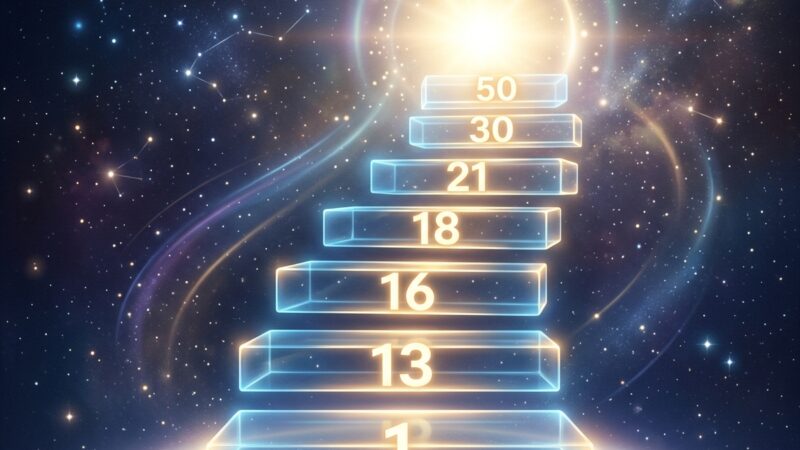
Your 1st birthday? You don’t even remember it. Your 10th? Maybe a blurry image of cake and balloons. But your 16th, your 18th, your 30th — those stick with you like a song you can’t stop humming.
Here’s something wild: out of every birthday you’ll ever celebrate, only about 10-12 of them genuinely feel like a big deal. The rest? They kind of blur together. And that’s not just your imagination. Science backs it up — our brains are wired to remember emotionally charged milestones more vividly than regular ones.
So which birthday milestones that matter most actually deserve the spotlight? Which important birthday ages bring real changes — legally, emotionally, and socially? And why do certain significant birthday years hit harder than others?
Let’s walk through every major milestone, from your very first birthday to the ones where you start losing count. Whether you’re planning a celebration for yourself, your kid, or someone you love, this guide will help you understand why these birthdays carry so much weight.
Why Do Some Birthdays Feel Bigger Than Others?
Not all birthdays are created equal. You don’t throw the same party for turning 27 as you do for turning 30. But why?
There are three big reasons certain birthdays feel like landmarks:
- Legal milestones — You gain new rights or responsibilities (driving, voting, drinking).
- Cultural expectations — Society tells you “this one matters” (sweet 16, quinceañera at 15).
- Psychological shifts — Your brain treats round numbers and decade changes as turning points.
A 2014 study published in the Proceedings of the National Academy of Sciences found that people approaching a new decade (ages 29, 39, 49) are more likely to make major life changes. They run marathons, start affairs, or have existential crises — all because the number on the cake feels heavy.
So the birthday milestones that matter most aren’t random. They’re a mix of law, culture, and your own brain playing tricks on you.
There’s real psychology behind why birthdays carry so much emotional weight, and understanding it can change how you approach each one.
Early Childhood Milestones (Ages 1–5)
Turning 1: The Birthday You’ll Never Remember
Your first birthday isn’t really for you — it’s for your parents. They survived a full year of sleepless nights, diaper disasters, and learning on the fly. The cake smash photos? That’s their trophy.
But culturally, turning 1 is significant in many places. In South Korea, the Doljanchi celebration involves placing objects in front of the baby — whatever they grab supposedly predicts their future. In India, the Annaprashan ceremony sometimes coincides with the first birthday.
Did You Know? Birthday traditions vary wildly across cultures — in some countries, the first birthday is the biggest celebration a child will ever have.
Turning 5: Your First “Real” Milestone
Five feels big for kids because it’s usually when school starts. It’s their first taste of independence, their first “big kid” moment. Parents feel it too — their baby is officially growing up.
At 5, kids start forming lasting memories. So unlike the 1st, 2nd, and 3rd birthdays, this one might actually stick.
The Tween and Teen Years (Ages 10–17)
Turning 10: Welcome to Double Digits
You remember this one, don’t you? The thrill of telling people you’re in “double digits.” It sounds silly now, but at 10, it feels like you just leveled up in a video game.
Ten is also when kids start getting genuinely excited about birthdays in a self-aware way. They plan, they make wish lists, they care about who’s invited. It’s the first birthday where they are in charge of the vibe.
Turning 13: Officially a Teenager
Thirteen is a culturally loaded number. You’re a teenager now. In Judaism, 13 brings the Bar Mitzvah (or 12 for Bat Mitzvah), a ceremony that marks the transition from childhood to adulthood.
But even outside religious traditions, 13 feels like crossing a bridge. You’re not a kid anymore. You start caring about different things — music, identity, how people see you. It’s messy, confusing, and exciting all at once.
Pro Tip: If you’re planning a 13th birthday party, ask the teen what they want. This is the age where their opinion about their own celebration starts mattering more than yours.
Turning 15: Quinceañera and Global Coming-of-Age
Fifteen is one of the most important birthday ages in Latin American cultures. The Quinceañera is a massive celebration marking a girl’s transition into womanhood. It involves a special dress, a choreographed waltz, a religious ceremony, and often a party that rivals weddings.
In other parts of the world, 15 is when teens start thinking about the future — high school choices, early career ideas, who they want to become.
Turning 16: Sweet Sixteen — America’s Favorite Teen Milestone
Sweet 16 has been romanticized by movies, TV shows, and MTV’s My Super Sweet 16 for decades. In the United States, it’s the age you can get a driver’s license in most states — and that alone makes it feel like freedom.
But 16 isn’t just an American thing. In many countries, 16 is when you can legally work part-time, consent to certain medical decisions, or even get married with parental permission (though laws are changing on that front).
Quick Fact: Golden birthdays — where your age matches the date you were born — sometimes fall on 16, making it an even bigger deal for some teens.
The Legal Milestones (Ages 18 and 21)
Turning 18: The Day Everything Changes
If you had to pick one birthday from this entire list as the most significant — 18 would win for most people worldwide.
At 18, you legally become an adult in most countries. Here’s what changes:
- Voting rights — You can now shape your country’s future
- Military eligibility — In many nations, you can enlist
- Legal contracts — You can sign leases, take out loans, and make binding agreements
- Criminal responsibility — You’re tried as an adult now
- Tattoos and piercings — No more parental permission needed (in most places)
- Leaving home — Legally, nobody can stop you
It’s thrilling and terrifying. One day you’re asking for bathroom passes in school. The next, you can vote, get a credit card, and be sued.
There’s a reason the 18th and 21st birthdays carry so much cultural weight — they’re the birthdays where society officially says, “You’re on your own now.”
Turning 21: The Last Legal Frontier (in the U.S.)
Twenty-one is the birthday in America. It’s when you can legally purchase and consume alcohol. Bars, clubs, casinos in certain states — all of it opens up.
But here’s what many people don’t realize: 21 isn’t special everywhere. In most of Europe, the legal drinking age is 18 (or even 16 for beer and wine in Germany). In Japan, it’s 20. In India, it varies by state — from 18 to 25.
Still, 21 has become a globally recognized symbol of full adulthood, partly because of American pop culture’s massive influence.
Warning: The pressure to celebrate 21 with heavy drinking sends thousands of young adults to emergency rooms every year. The CDC reports that excessive drinking is responsible for over 140,000 deaths annually in the U.S. Celebrate smart.
The Decade Markers (Ages 25, 30, 40, 50)
Turning 25: The Quarter-Life Reality Check
Twenty-five doesn’t come with a new legal privilege (except cheaper car insurance in the U.S. — seriously, that’s a thing). But emotionally? It’s a big one.
At 25, your brain is finally fully developed. The prefrontal cortex — the part responsible for decision-making, impulse control, and understanding consequences — reaches maturity around this age, according to neuroscience research.
This is also when the “quarter-life crisis” hits many people. You start asking yourself:
- Am I where I thought I’d be?
- Is this the right career? The right relationship?
- What am I actually doing with my life?
People often feel surprisingly emotional on their birthdays, and 25 is a prime example. It’s not sad, exactly. It’s just… aware.
Turning 30: The Big One Everyone Talks About
Thirty gets more anxiety than almost any other birthday. There’s this unspoken checklist society hands you — career, relationship, house, “figured out” — and if you haven’t ticked every box, 30 can feel like a deadline you missed.
But here’s the truth: most people who’ve passed 30 will tell you it’s better than their 20s. You know yourself better. You stop caring about what people think. You spend money on a good mattress instead of club entry fees.
A 2018 survey by The Harris Poll found that adults aged 30-39 reported higher life satisfaction than those in their 20s. Turns out, the fear of 30 is worse than 30 itself.
Pro Tip: If someone you know is dreading their 30th, don’t joke about “getting old.” Instead, celebrate what they’ve built. That reframe makes a real difference.
Some adults stop celebrating birthdays altogether around this age, and that’s worth understanding too.
Turning 40: The Unofficial Midlife Marker
Forty is the birthday that makes you sit up straight. Your body starts sending memos — recovery from a late night takes three days now, not three hours. Hangovers aren’t funny anymore. Your doctor starts saying phrases like “baseline screening.”
But 40 is also deeply empowering for many people. You’ve survived enough to know what works and what doesn’t. Your friendships are smaller but stronger. Your nonsense tolerance is basically zero.
Birthdays do feel like they come faster as you age, and 40 is usually when people first notice that acceleration. It’s not depressing — it’s a wake-up call to pay attention.
Did You Know? The concept of a “midlife crisis” at 40 was first introduced by psychoanalyst Elliott Jaques in 1965. But modern research from the British Medical Journal suggests happiness actually follows a U-shape — dipping in your 40s and rising again in your 50s and 60s.
Turning 50: The Half-Century Badge of Honor
Fifty is a badge. You’ve been on this planet for half a century. Fifty years of learning, stumbling, recovering, and figuring it out.
At 50, many people experience a shift in priorities. Career ambitions may give way to legacy building. Travel, health, and relationships move to the top of the list. And there’s a surprising freedom in it — the race you thought you were running? You realize there was never a finish line.
Health-wise, 50 is when doctors recommend more regular screenings — colonoscopies, bone density tests, and closer monitoring of heart health. The American Cancer Society recommends starting regular colorectal cancer screenings at age 45-50.
The Golden Years (Ages 60, 65, 75, and Beyond)
Turning 60: Entering a New Chapter
Sixty is the decade where many people start thinking about retirement seriously. In several countries, 60 is the official retirement age (India, China for women, many Southeast Asian nations).
It’s also an age where people reflect deeply on life during birthdays. The reflection isn’t gloomy — it’s more like looking at a photo album. You start appreciating experiences over achievements.
In Hindu culture, the Shashtipoorthi (60th birthday) is celebrated with a grand ceremony — almost like a second wedding — to mark the completion of one full cycle of the Indian calendar.
Turning 65: The Official “Senior” Status
In the United States, 65 is the magic number for Medicare eligibility. It’s also when Social Security benefits reach a significant tier (though full retirement age has shifted to 66-67 for many Americans born after 1943).
Around the world, 65 is generally recognized as “senior citizen” age. Discounts, benefits, and senior-specific programs kick in. It’s also when many people genuinely retire and start their “second life.”
Turning 75 and Beyond: Every Year is a Gift
After 75, every birthday carries extra meaning. The global average life expectancy in 2023 was about 73 years, according to the World Health Organization. So reaching 75, 80, 90, or 100 isn’t just a milestone — it’s a celebration of resilience.
- 80 — Often celebrated with large family gatherings. In many Asian cultures, the 80th birthday (known as Sanju in Japanese tradition) holds special spiritual significance.
- 90 — You’ve outlived most of your peers. Your stories are literally living history.
- 100 — The ultimate milestone. In the UK, centenarians receive a card from the reigning monarch. In Japan, Respect for the Aged Day honors those who’ve reached this incredible age.
Quick Fact: The number of centenarians worldwide is expected to reach 3.7 million by 2050, according to the United Nations. Turning 100 might not be as rare as you think in a few decades.
Birthday Milestones Across Different Cultures
The birthday milestones that matter most aren’t universal. Different cultures place importance on very different ages.
| Culture | Important Age | Celebration |
|---|---|---|
| Latin American | 15 | Quinceañera |
| Jewish | 13/12 | Bar/Bat Mitzvah |
| Japanese | 7, 5, 3 | Shichi-Go-San |
| Chinese | 60 | Full cycle celebration |
| American | 16, 21 | Sweet 16, Legal drinking |
| Korean | 1, 60 | Doljanchi, Hwangap |
| Hindu | 60 | Shashtipoorthi |
How different cultures celebrate birthdays reveals just how much meaning we attach to specific numbers — and how that meaning shifts depending on where you grow up.
Some cultures don’t even celebrate individual birthdays at all. Different religions view birthdays through very different lenses, with some actively discouraging the practice.
The Emotional Side of Birthday Milestones
Let’s talk about something most articles skip: not every milestone birthday feels happy.
Turning 30 can bring anxiety. Turning 40 can trigger grief over lost time. Turning 50 can make you question whether you’ve done “enough.” And the big ones after 65? They sometimes come with a sharp awareness of mortality.
This is completely normal. The psychology behind birthday happiness is complicated — it’s joy and fear and nostalgia all tangled together.
Here’s what helps:
- Don’t compare your milestone to someone else’s. Your 30 doesn’t have to look like your best friend’s 30.
- Create your own ritual. Write a letter to yourself. Plant a tree. Take a solo trip. Make the milestone yours.
- Talk about it. If a birthday feels heavy, say so. You’re not being dramatic — you’re being human.
- Celebrate what you’ve survived, not just what you’ve achieved. Getting here was hard enough.
Milestone Birthdays You Might Not Know About
Beyond the obvious ones, there are a few interesting milestone types that people are increasingly celebrating:
- Champagne birthday — When your age matches the last two digits of your birth year (e.g., turning 25 in 2025 if born in 2000). It’s getting trendy on social media.
- Golden birthday — When your age matches your birth date (turning 14 on the 14th, for example). Golden birthdays have seen a massive popularity surge in recent years.
- Leap year birthdays — Born on February 29th? You technically only get a “real” birthday every four years, which makes each one extra special.
How to Make Any Milestone Birthday Count
You don’t need a massive party or an expensive trip to make a milestone meaningful. Here’s what actually sticks:
- Write a reflection. Even a few sentences about where you are versus where you were. Future you will love reading it.
- Gather the right people. Not the most people — the right people. Quality over quantity.
- Start a new tradition. Something you’ll do every milestone birthday. A specific restaurant, a hike, a photo in the same spot.
- Give yourself permission to feel whatever you feel. Excited? Great. Sad? That’s okay too. Mixed? Most honest response there is.
- Document it. Birthday photos matter more than you think. You don’t need a professional photographer — just take a few real, unfiltered moments.
FAQ Section
What are the most important birthday ages?
The most widely recognized important birthday ages include 1, 13, 16, 18, 21, 30, 40, 50, 60, 65, 75, and 100. These carry legal, cultural, or psychological significance. Ages 18 and 21 tend to be the most universally important because of the legal rights they unlock — voting, drinking, signing contracts, and full adult responsibilities.
Why do decade birthdays (30, 40, 50) feel like such a big deal?
Your brain processes round numbers as psychological benchmarks. Research from the Proceedings of the National Academy of Sciences shows that people approaching a new decade engage in more self-reflection and are more likely to make major life changes. It’s not just social pressure — your brain literally treats these numbers as checkpoints.
Are milestone birthdays different in other countries?
Absolutely. In Latin America, 15 (Quinceañera) is one of the biggest milestones. In Jewish tradition, 13 (Bar Mitzvah) holds deep religious significance. In South Korea, the 1st birthday (Doljanchi) and 60th (Hwangap) are celebrated with elaborate ceremonies. The birthday milestones that matter most depend heavily on cultural, religious, and legal contexts.
What’s the hardest milestone birthday emotionally?
Studies and surveys consistently point to turning 30 and turning 50 as the birthdays that cause the most emotional stress. Turning 30 triggers “quarter-life crisis” anxiety about achievements, while turning 50 often brings awareness about aging and mortality. Both are totally normal responses, and most people report feeling better once they’ve actually passed the milestone.
Do birthday milestones still matter if you don’t celebrate birthdays?
Yes — because milestones aren’t just about parties. They’re internal markers your brain uses to process time, growth, and change. Even people who don’t celebrate still tend to feel something at 18, 30, or 50. The milestone exists whether or not there’s cake involved.
Your Milestones, Your Meaning
Every significant birthday year is really just a number — until you give it meaning. Some people throw a massive party at 40 and quietly spend their 50th alone with a book. Both are perfect. Both are valid.
The birthday milestones that matter most aren’t determined by society, tradition, or Instagram. They’re determined by what’s happening inside you at that specific moment in your life.
So whether you’re approaching a milestone birthday or looking back at one that already passed, remember this: you don’t need a specific age to start something new, change direction, or celebrate yourself.
But if the candles on the cake happen to line up with a number that makes you pause and reflect? Don’t rush past that feeling. Sit with it. Let it change you.
That’s what milestones are for.
Related Articles

Twins’ Birthday Wishes: Double the Fun & Greetings
Celebrating two people at once is a special kind of joy. Whether you’re writing in a...

Thank You Messages: 100+ Replies for Birthday Wishes
Someone took a moment out of their day to think of you, type out a message,...

Best Friend Birthday Wishes: Top Heartfelt Messages
A good friend’s birthday deserves more than a rushed text or a recycled message you’ve sent...