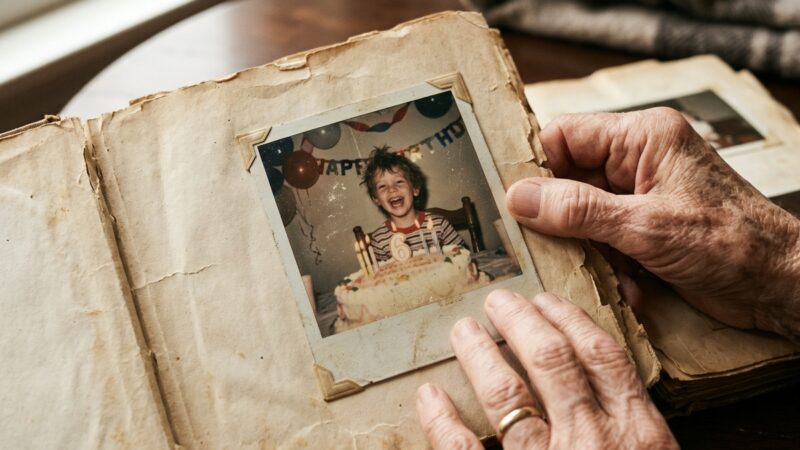
A single birthday photo from 1994 changed my entire perspective on memory. My grandmother passed away that year, and the only photo we have of her last birthday — sitting with a lopsided cake, laughing at something my dad said — became the most valuable thing in our family album. No one planned that shot. Someone just grabbed a camera.
That’s the thing about birthday photos. You don’t realize why birthday photos matter until years pass and those frozen moments become the only way to revisit people, places, and versions of yourself that no longer exist.
We snap hundreds of photos at birthday parties without thinking twice. But there’s a deeper reason we do it — something psychological, emotional, and even cultural. This article breaks down exactly why birthday photography holds such a powerful place in our hearts, why we feel compelled to capture these moments, and how these images shape our memories long after the candles have burned out.
Birthday Photos Are Time Machines (And Your Brain Knows It)
Here’s something fascinating. Your brain doesn’t store memories like a filing cabinet. It stores them more like a rough sketch — fuzzy, incomplete, and easily distorted over time. Psychologists call this memory reconstruction, and it means your “memories” are actually rebuilt every time you try to recall them.
Birthday photos act as anchors for those fading memories.
A 2012 study published in Psychological Science found that photographs significantly improve the accuracy of autobiographical memory. When you look at a birthday photo, your brain fills in the gaps — the sounds, the smells, the feelings. Without the photo, that entire memory might eventually disappear.
Think about it. Can you remember your 7th birthday without looking at a picture? Probably not clearly. But show yourself a photo from that day, and suddenly the details come flooding back — the Power Rangers cake, your best friend spilling juice on the carpet, the exact shirt you wore.
That’s why the science behind birthday memories is so powerful. Photos don’t just capture moments. They protect them from your brain’s natural tendency to forget.
Why Birthdays Specifically?
You take photos at lots of events — vacations, weddings, random Tuesdays. So what makes birthday photography different?
Birthdays are personal milestones. They mark the passage of time in a way nothing else does. Every birthday photo is essentially a timestamp of who you were at that exact age, surrounded by the people who mattered to you at that specific point in your life.
- Age 5: Missing front teeth, wearing a party hat, pure joy
- Age 16: Awkward teenage years, first “grown-up” party
- Age 30: Maybe your first kid is in the photo now
- Age 60: Surrounded by grandchildren you didn’t even imagine at 16
Line up your birthday photos across decades and you’re looking at a visual autobiography. No other type of photo does this so consistently.
The Emotional Weight of Birthday Photography
Let’s get real for a second. Why do some birthday photos make you cry?
It’s not about the cake or the decorations. It’s about context.
A birthday photo of your dad at 45 hits differently when he’s now 75 and his health isn’t what it used to be. A photo of your childhood best friend at your 10th birthday party means something entirely new when you haven’t spoken to them in 15 years.
Birthday photos carry emotional compound interest. Their value increases with time.
The People Who Are No Longer There
This is the part nobody talks about enough. Birthday photos often become the most treasured images of people who have passed away. Why? Because birthdays are one of the few occasions where people naturally gather, smile, and let their guard down.
Funeral photos don’t exist (thankfully). Candid daily photos were rare before smartphones. But birthday photos? Families have been taking those for generations.
Quick Fact: Kodak’s biggest marketing push in the 1950s and 60s specifically targeted birthday parties and holidays as “must-photograph” events. They understood that emotional moments sell film. That tradition carried forward, and now we all instinctively reach for our phones when someone’s about to blow out candles.
For many people, understanding why birthdays matter in psychology explains this emotional attachment. Birthdays represent life itself — so photos from birthdays represent proof of life, of joy, of connection.
Birthday Photos and Identity
Here’s something you might not have considered. Birthday photos help you understand who you are.
Sounds dramatic? It isn’t. Identity researchers have found that visual records of personal history contribute to what psychologists call narrative identity — the story you tell yourself about your own life.
Your birthday photos tell you:
- What you looked like at every age
- Who your friends were at different stages
- What made you happy
- How your family dynamics changed
- Where you lived and how your environment shifted
Strip away all your birthday photos, and a piece of your personal narrative goes missing. You might still remember the facts, but the feeling of those moments becomes harder to access.
Why We Can’t Stop Sharing Birthday Photos Online
Okay, let’s talk about the elephant in the room. Social media.
According to data from various social media analytics platforms, birthday-related posts consistently rank among the most engaged content types on Instagram and Facebook. People love posting birthday photos, and people love reacting to them.
But why?
The Social Validation Factor
Posting birthday photos online serves multiple psychological needs:
- Belonging: “Look at all these people who showed up for me”
- Celebration of self: “I’m here, I’m alive, and that’s worth celebrating”
- Social bonding: Friends and family who couldn’t attend feel included
- Memory creation: The post itself becomes a digital scrapbook entry
There’s a reason why people share birthday posts on social media with such enthusiasm. It’s not vanity (well, not just vanity). It’s a deeply human need to mark important moments publicly and receive acknowledgment from your community.
The TikTok and Instagram Effect
The way we take birthday photos has changed dramatically. It’s no longer just “everyone stand together and smile.” Now it’s:
- Aesthetic flat-lays of party decorations
- Boomerangs of blowing out candles
- Photo dumps with 10 carefully curated slides
- Professional-looking setups even for casual parties
How social media changed birthday culture is a whole conversation in itself. But the core instinct — wanting to capture and share these moments — hasn’t changed. Only the format has.
Pro Tip: If you’re worried about over-sharing, remember this: future you will be grateful for every birthday photo you took. Even the “too many” ones. The ones you almost deleted because your hair looked weird? Those might become your favorites in 20 years.
The Importance of Birthday Photography Across Different Cultures
Birthday photography isn’t just a Western thing. Across the globe, different cultures have their own traditions around capturing birthday moments — and the importance of birthday photography transcends borders.
Cultural Snapshots
- Japan: The first birthday (issho mochi) is heavily photographed, where a child carries a heavy rice cake as a symbolic ritual. These photos are family treasures.
- Mexico: Quinceañera photos (15th birthday) are treated with the same seriousness as wedding photography. Families hire professional photographers and create elaborate albums.
- South Korea: The doljanchi (first birthday) involves a ceremony where the baby picks an object that “predicts” their future. Every family photographs this moment religiously.
- India: Many families document milestone birthdays with professional studio sessions, especially for children’s first few years.
The specifics vary, but the underlying motivation is universal. People want to freeze these moments because they know — consciously or not — that time won’t wait.
If you’re curious about how celebrations differ globally, birthday traditions around the world reveals some beautiful customs that revolve around photography and memory-keeping.
Birthday Photos You’ll Regret NOT Taking
Let’s flip this conversation. Most articles talk about why birthday photos matter. Let me tell you about the ones people regret not taking.
I’ve read hundreds of forum threads on Reddit and Quora where people share their biggest birthday photo regrets. The patterns are striking:
The Most Common Regrets
-
“I didn’t take photos at my grandparent’s last birthday.” This comes up over and over. People assume there will be another year. Sometimes there isn’t.
-
“I was too self-conscious about my weight/appearance.” Years later, nobody cares about the extra pounds. They care about the smile, the people, the moment.
-
“We stopped taking birthday photos after the kids grew up.” Parents photograph every birthday until kids hit about 12-13, then stop. Those missing teenage/adult years create gaps in the family visual history.
-
“I didn’t photograph the small, casual celebrations.” Not every birthday is a big party. But the quiet ones — a home-cooked dinner with two close friends, a solo birthday trip — are worth capturing too.
-
“I was always behind the camera, never in front.” The person who always takes the photos is often missing from the entire family photo collection. Sound familiar?
Did You Know? A survey by Chatbooks (a photo printing company) found that 73% of parents have thousands of digital photos but fewer than 10 printed ones on display. Birthday photos get taken but often disappear into cloud storage, never to be seen again.
Birthday Memories and Photos: The Connection Runs Deep
Birthday memories and photos share a relationship that goes beyond simple documentation. Photos actually change how you remember events.
The Photo-Taking Impairment Effect
Here’s a twist you didn’t expect. Research from Fairfield University (2013) found that photographing an object actually reduces your memory of it. Scientists called it the “photo-taking impairment effect.”
But — and this is the important part — this only applies when you mindlessly snap photos without paying attention. When you take intentional, meaningful photos, the opposite happens. Your memory gets stronger because you’re actively choosing what matters.
So the birthday parent who robotically films the entire party on their phone might actually remember less than the parent who puts the phone down, stays present, and takes five thoughtful photos.
Pro Tip: Take fewer birthday photos, but make them intentional. Put the phone away during the actual candle-blowing, cake-eating, and laughing moments. Then capture a few group shots, candid moments, and detail shots (the cake, decorations, gifts). Quality beats quantity every time.
The Nostalgia Effect
There’s a reason you feel warm and fuzzy looking at old birthday photos. Nostalgia isn’t just a pleasant feeling — it’s a psychological resource.
Research published in the Journal of Personality and Social Psychology shows that nostalgia:
- Increases feelings of social connectedness
- Boosts self-esteem
- Provides a sense of meaning in life
- Reduces anxiety and loneliness
Birthday photos are one of the most reliable triggers for nostalgia. They combine personal significance (it’s YOUR day) with social connection (you’re usually with loved ones) — the two key ingredients for powerful nostalgic response.
This is closely tied to why people feel emotional on their birthday. The photos from these emotional moments become charged with meaning that only deepens with time.
Practical Tips: How to Take Birthday Photos That Actually Matter
Knowing why birthday photos matter is one thing. Taking good ones is another. And by “good,” I don’t mean technically perfect. I mean photos you’ll actually care about in 30 years.
What To Capture
- The arrival reaction: That moment someone walks in and sees the decorations or the surprise. Pure, unfiltered emotion.
- Candid laughter: Not posed smiles. The real, caught-off-guard belly laughs.
- Three generations: If grandparents, parents, and kids are all there, get them in one frame. Trust me.
- The details: Close-up of the cake, the hand-written birthday card, the wrapped gifts. These details disappear from memory first.
- The quiet moments: The birthday person sitting alone for a second, taking it all in. These become the most powerful photos later.
- Group shots: Yes, the cliché “everyone squeeze together” photo. You’ll be grateful for it.
What Most People Get Wrong
- Over-filtering: That trendy filter looks great today but will look dated in five years. Save the original.
- Only photographing kids: Adults deserve birthday photos too. Why some adults stop celebrating birthdays is a real phenomenon, and the lack of photos makes it worse.
- Forgetting the photographer: Hand someone else the camera for a few shots. Get yourself in the frame.
- All digital, nothing printed: Print your favorites. Digital files get lost, corrupted, or trapped in obsolete formats. A printed photo on your wall works for decades.
Common Myths About Birthday Photos
Let’s clear up some misconceptions that stop people from fully appreciating birthday photography.
Myth 1: “Professional Photos Are the Only Ones That Matter”
Wrong. Some of the most treasured birthday photos in history were taken with disposable cameras, old Polaroids, and blurry flip phones. The emotional content of the photo matters infinitely more than the resolution.
Your grandma’s slightly out-of-focus birthday photo from 1978 is worth more to your family than any professionally shot image.
Myth 2: “Taking Photos Ruins the Moment”
This is partially true — if you spend the entire celebration behind a screen. But a few intentional photos don’t ruin anything. They create a bridge between your present experience and your future self who’ll want to revisit it.
Myth 3: “We Already Have Too Many Photos”
You have too many random photos. You probably don’t have enough meaningful ones. Birthday photos, done right, fall firmly in the “meaningful” category.
Myth 4: “Kids Don’t Care About Birthday Photos”
Kids don’t care now. Wait until they’re 25 and moving into their first apartment. Wait until they’re 40 and their own kid asks, “What did you look like when you were my age?” Those birthday photos become priceless.
The Future of Birthday Photography
Where is birthday photography headed? A few interesting trends are emerging as we move through 2025 and into 2026:
- AI-enhanced memory albums: Apps that automatically organize birthday photos by year, creating visual timelines without manual effort.
- 360-degree and spatial photos: Apple’s Vision Pro and similar devices are making immersive birthday memories possible. Imagine “stepping back into” your child’s 5th birthday party.
- Return to film: There’s a growing movement (especially among Gen Z) toward disposable cameras and film photography for birthday celebrations. The imperfection feels more authentic.
- Photo books over social media: More families are creating private, printed photo books instead of posting everything publicly. How birthday trends changed in Gen Z reveals this shift toward intentional, private memory-keeping.
The tools change. The motivation stays the same. We photograph birthdays because we understand — even if we can’t articulate it — that these moments are numbered.
FAQ Section
Why do people take so many photos at birthday parties?
Birthday parties combine several powerful memory triggers — personal milestone, social gathering, emotional moments, and visual elements like cakes and decorations. People instinctively want to preserve these moments because birthdays happen only once a year and mark the passage of time in a very personal way. The importance of birthday photography is rooted in our deep need to hold onto fleeting moments.
Do birthday photos actually help us remember better?
Yes, but with a catch. Research shows that intentional photography improves memory recall because you’re actively choosing what to capture. Mindless, constant snapping can actually reduce memory (called the photo-taking impairment effect). The best approach is to stay present during the celebration and take a handful of meaningful, thoughtful photos rather than filming everything.
What makes birthday photos more special than other types of photos?
Birthday photos are unique because they create a chronological visual record of your life. Unlike vacation or event photos, birthday photos happen at the same recurring milestone every year. Lined up together, they show how you’ve changed physically, who surrounded you at different life stages, and what your world looked like at every age. No other photo category offers this kind of personal timeline.
How can I make birthday photos more meaningful?
Focus on candid moments instead of only posed shots. Capture the people, the reactions, and the small details — the handwriting on a card, the way someone laughs, three generations standing together. Print your favorites instead of leaving them buried in your phone. And most importantly, get yourself in the photos too. You’re part of the story.
Should adults still take birthday photos?
Absolutely. There’s a common pattern where people stop being photographed on birthdays after childhood, and it creates missing chapters in their personal visual history. Your 35th birthday photo will mean just as much to your family as your 5th — maybe more, because adult birthday photos are rarer and often more emotionally rich.
One Last Thought
A photograph is the only thing that lets future you visit present you. And birthday photos? They’re the most consistent, most personal, most emotionally loaded versions of that time travel.
You don’t need a fancy camera. You don’t need perfect lighting or a professional photographer. You need someone to press a button while the people you love are gathered around a cake, singing slightly off-key, and grinning at the person whose day it is.
Twenty years from now, you won’t care about the resolution. You’ll care about the faces.
So at the next birthday — yours or someone else’s — take the photo. Better yet, get in the photo. Your future self is already thanking you.
And if birthdays stir up all kinds of unexpected feelings for you, you might want to explore why people reflect on life during birthdays. It’ll make a lot of things click.
Related Articles

Twins’ Birthday Wishes: Double the Fun & Greetings
Celebrating two people at once is a special kind of joy. Whether you’re writing in a...

Thank You Messages: 100+ Replies for Birthday Wishes
Someone took a moment out of their day to think of you, type out a message,...

Best Friend Birthday Wishes: Top Heartfelt Messages
A good friend’s birthday deserves more than a rushed text or a recycled message you’ve sent...