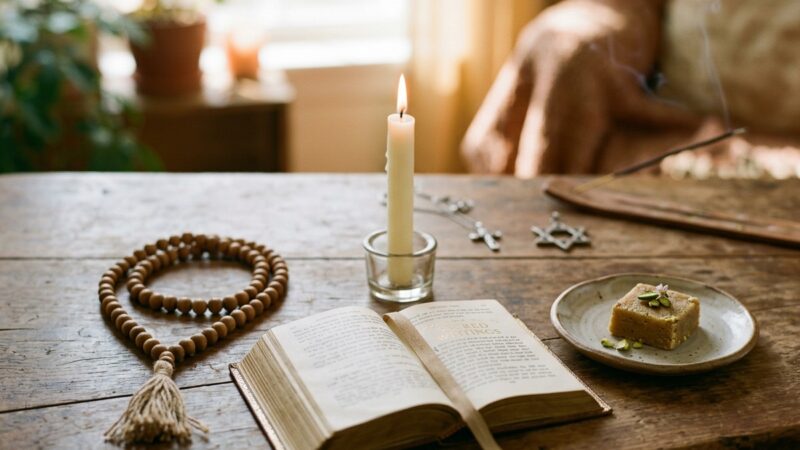
Not every religion blows out candles on a cake. That might sound strange if you grew up thinking birthdays are universal, but the truth is — how different religions view birthdays varies wildly. Some faiths encourage big celebrations. Others discourage them entirely. A few sit somewhere in between, where culture and religion mix together in interesting ways.
Think about it. You probably know someone who doesn’t celebrate their birthday for religious reasons. Maybe you’ve wondered why. Or maybe you’re that person, and you’re curious how your faith compares to others on this topic.
Either way, you’re in the right place. This article walks you through what major religions — Christianity, Islam, Judaism, Hinduism, Buddhism, Jehovah’s Witnesses, and a few others — actually say about birthdays. No judgment. Just facts and honest perspectives.
And if you’re curious about how different cultures celebrate birthdays beyond religion, that’s a whole separate rabbit hole worth exploring too.
Let’s get into it.
Why Do Birthdays Even Matter in Religion?
Before we talk about specific faiths, let’s address the bigger question: why would a religion even care about birthdays?
Birthdays sit at the intersection of personal identity, cultural tradition, and spiritual belief. For some religions, celebrating a person’s birth is a way to honor God’s gift of life. For others, it’s seen as a form of self-glorification — putting too much focus on an individual instead of God.
There’s also the historical angle. Ancient birthday celebrations were closely tied to pagan rituals, astrology, and even superstitions. Some religions still associate birthdays with those roots and choose to distance themselves.
Quick Fact: The ancient Egyptians were among the first to celebrate birthdays — but only for pharaohs. Common people didn’t get birthday parties. The Greeks added candles to cakes as offerings to Artemis, the moon goddess. You can read more about the origin of birthday cakes and candles — it’s a fascinating story.
So religious views on birthdays aren’t random. They come from deep theological and historical reasoning.
Christianity and Birthdays
What the Bible Actually Says
Here’s something that surprises a lot of people: the Bible doesn’t command Christians to celebrate birthdays. It also doesn’t explicitly forbid it. The topic sits in a gray area.
The Bible mentions birthdays only twice — Pharaoh’s birthday in Genesis 40:20-22 and King Herod’s birthday in Matthew 14:6-10. Both occasions ended badly (someone got executed at each party). Some scholars use this as evidence that the Bible portrays birthdays negatively.
But most mainstream Christian theologians say that’s a stretch. Those passages describe specific events, not blanket rules about birthdays.
How Most Christians Practice It
The vast majority of Christians worldwide celebrate birthdays with no guilt at all. Catholic, Protestant, Orthodox, and Evangelical churches generally have no issue with birthday celebrations. Many see it as a moment to thank God for the gift of life.
Some churches even hold special blessings for members on their birthdays. It’s common to hear “Happy Birthday” sung in churches across Latin America, the Philippines, and sub-Saharan Africa.
That said, certain Puritanical traditions historically discouraged birthday celebrations because of their pagan origins. This attitude was common in early American colonial life but mostly faded by the 19th century.
Christmas — The Ultimate Birthday Debate
Ironically, the biggest Christian celebration — Christmas — is itself a birthday party. It marks the birth of Jesus Christ. Yet scholars widely agree that December 25th probably isn’t Jesus’s actual birthdate. The date was likely chosen to overlap with existing Roman festivals.
So Christianity has a complicated but mostly positive relationship with birthdays.
Islam and Birthdays
The Two Main Perspectives
Religious views on birthdays within Islam generate a LOT of debate. And there isn’t one single answer because Islam has diverse schools of thought.
Perspective 1 — Birthdays are discouraged or haram (forbidden):
Many conservative scholars, particularly in the Salafi and Wahhabi traditions, argue that birthday celebrations are a form of bid’ah (innovation in religion). The reasoning goes like this: Prophet Muhammad (peace be upon him) didn’t celebrate his own birthday, the Sahaba (companions) didn’t celebrate theirs, and Islam has only two designated celebrations — Eid al-Fitr and Eid al-Adha. Adding another celebration is seen as imitating non-Muslim practices.
Perspective 2 — Birthdays are culturally permissible:
Other scholars, especially in the Hanafi and parts of the Shafi’i tradition, say that birthdays are a cultural practice — not a religious one. Since they don’t involve any act of worship, they don’t qualify as bid’ah. A birthday party is just a social gathering, and as long as it doesn’t involve anything haram (alcohol, excessive mixing, wasteful spending), it’s fine.
The Mawlid Question
Here’s where it gets really interesting. Mawlid an-Nabi — the celebration of Prophet Muhammad’s birthday — is observed in many Muslim-majority countries. Egypt, Morocco, Turkey, Pakistan, Indonesia, and others hold public celebrations, often with special foods, poetry recitations, and community gatherings.
But this practice is itself controversial. Saudi Arabia didn’t officially recognize Mawlid as a public holiday until very recently, and many scholars still consider it an innovation.
Did You Know? In some Muslim families, parents don’t throw birthday parties for kids but might acknowledge the day quietly — maybe with a special meal or dua (prayer). It’s a personal, family-level decision more often than a strict religious ruling.
Many families also find that their feelings about birthdays are closely tied to their cultural background. If you’re curious about why some people don’t enjoy celebrating birthdays at all, religion is one of several reasons.
Judaism and Birthdays
A Historically Mixed Relationship
Judaism has an interesting relationship with birthdays. In the Talmudic era, rabbis didn’t give birthdays much importance. Some scholars even associated birthday celebrations with Gentile (non-Jewish) customs.
But over time, attitudes shifted significantly.
Modern Jewish Birthday Practices
Today, most Jewish families celebrate birthdays warmly. Reform, Conservative, and Modern Orthodox communities all embrace birthday celebrations without religious conflict.
There are some distinctly Jewish birthday traditions too:
- The Hebrew birthday — Some observant Jews celebrate their birthday according to the Hebrew calendar, not the Gregorian one. Your Hebrew birthday can fall on a different date each year.
- Torah aliyah — On your birthday (especially a Bar/Bat Mitzvah), you might be called up to read from the Torah.
- The Lubavitcher Rebbe’s teachings — Rabbi Menachem Mendel Schneerson, the last Lubavitcher Rebbe, actually encouraged Jews to treat their birthdays as spiritually significant days. He recommended extra prayer, charity (tzedakah), and reflection on one’s birthday.
- Psalm of the year — Some Jews recite a specific Psalm corresponding to their new age (age + 1 = Psalm number).
The Big Exception: Ultra-Orthodox Views
Some Haredi (ultra-Orthodox) communities are less enthusiastic about birthdays, viewing them as a secular Western import. They won’t necessarily forbid celebrations, but they don’t emphasize them either.
Pro Tip: If you’re invited to a Jewish birthday celebration, don’t be surprised if the date seems “off” compared to the Gregorian calendar. They might be celebrating the Hebrew date, which shifts annually.
Hinduism and Birthdays
Birthdays Are Generally Celebrated — With a Twist
Hinduism doesn’t have any prohibition against birthdays. In fact, many Hindu families celebrate birthdays enthusiastically, often with pujas (prayer rituals), visits to temples, and feeding the poor.
But here’s what’s unique: the traditional Hindu birthday is based on the lunar calendar (Tithi), not the solar/Gregorian one. Your Tithi birthday might fall on a different Gregorian date every year.
Janmashtami — The Most Famous Birthday in Hinduism
Lord Krishna’s birthday, known as Janmashtami, is one of the biggest festivals in Hinduism. It’s celebrated across India and the Hindu diaspora with fasting, singing, night-long prayer sessions, and dramatic reenactments of Krishna’s life.
Similarly, Ram Navami celebrates Lord Rama’s birthday, and Hanuman Jayanti honors Lord Hanuman’s birth.
So Hinduism clearly has no issue with the concept of celebrating birthdays — divine or human.
Modern Hindu Birthday Customs
In contemporary Hindu households — especially in India, Nepal, and among the diaspora — you’ll find a blend of traditional and Western birthday customs:
- Temple visit in the morning
- Aarti and tilak for the birthday person
- Distributing sweets or food to neighbors and the needy
- Cake cutting and candles (Western influence)
- New clothes for the birthday person
The birthday traditions around the world article covers how Indian birthday traditions compare to other countries if you want a deeper look.
Buddhism and Birthdays
The Philosophy Behind It
Buddhism presents a nuanced view. The core Buddhist teaching focuses on impermanence (anicca) — the idea that attachment to worldly things causes suffering. A birthday, by definition, marks your attachment to your personal timeline, your body, and your ego.
Does that mean Buddhists don’t celebrate birthdays? Not exactly.
What Happens in Practice
Theravada Buddhist countries like Thailand, Myanmar, Sri Lanka, and Cambodia do celebrate personal birthdays, but often with a spiritual flavor:
- Making merit — donating to monks or temples on your birthday
- Releasing animals — buying caged birds or fish and setting them free (symbolizing compassion)
- Visiting monasteries for blessings
- Offering food to monks in the morning
Vesak (Buddha Purnima) — the celebration of Buddha’s birth, enlightenment, and death — is the biggest Buddhist holiday worldwide. So again, the concept of honoring a birth isn’t foreign to Buddhism.
In Mahayana Buddhist traditions (China, Japan, Korea, Vietnam), birthdays are commonly celebrated. In Japan, for instance, individual birthdays became popular after World War II, influenced by Western culture. Before that, everyone’s age increased together on New Year’s Day — a system called kazoedoshi.
Did You Know? In some Thai Buddhist families, the morning of your birthday begins with offering food to monks. The party and cake come later in the day. It’s a beautiful blend of spiritual gratitude and modern celebration.
Jehovah’s Witnesses and Birthdays
The Clearest “No” Among Major Faiths
If you’re wondering, “do all religions celebrate birthdays?” — Jehovah’s Witnesses give the most definitive “no.”
They don’t celebrate birthdays. Period. Here’s their reasoning:
- Biblical association — Both birthday mentions in the Bible (Pharaoh’s and Herod’s) are connected to violence and death. Jehovah’s Witnesses see this as God’s disapproval of birthday celebrations.
- Pagan origins — Birthday celebrations trace back to pagan customs, astrology, and the belief that evil spirits are attracted to people on their birthdays. Early birthday candles were meant to ward off those spirits.
- Self-glorification — Celebrating one person elevates them in a way that should be reserved for God (Jehovah) alone.
- No early Christian precedent — The earliest Christians didn’t celebrate birthdays, and Jehovah’s Witnesses aim to follow first-century Christian practices closely.
What This Looks Like in Daily Life
Jehovah’s Witness children don’t have birthday parties. They don’t blow out candles. They typically sit out classroom birthday celebrations at school. Adults skip birthday dinners and gifts.
This can be socially challenging — especially for kids. But within the community, it’s a deeply held conviction, not just a rule. Families often show love through spontaneous gifts on non-birthday occasions instead.
If you’re interested in the emotional side of this, why some people feel emotional on their birthday explores the psychology of birthday-related feelings, which can run deep for people in these communities.
Sikhism and Birthdays
Gurpurab — The Guru’s Birthday
Sikhs celebrate Gurpurabs — the birth anniversaries of the ten Sikh Gurus, especially Guru Nanak Dev Ji (the founder of Sikhism) and Guru Gobind Singh Ji (the tenth Guru).
These celebrations involve:
- Akhand Path (continuous 48-hour reading of the Guru Granth Sahib)
- Nagar Kirtan (public processions with singing and chanting)
- Langar (free community meals open to everyone regardless of religion)
- Fireworks and decorations at Gurdwaras
Personal Birthdays in Sikhism
There’s no religious restriction on celebrating personal birthdays in Sikhism. Most Sikh families celebrate birthdays freely, often combining Western-style parties with a visit to the Gurdwara for prayers and blessings.
Some devout Sikhs prefer celebrating their birthday according to the Nanakshahi calendar rather than the Gregorian calendar, though this is more common for Gurpurabs than personal birthdays.
Other Religious Perspectives Worth Knowing
Bahá’í Faith
Bahá’ís celebrate the birthdays of their two founders — The Báb and Bahá’u’lláh — as holy days called the Twin Holy Birthdays. Personal birthdays are also celebrated without any prohibition.
Rastafari
Many Rastafarians celebrate the birthday of Emperor Haile Selassie I (July 23) as a significant occasion. Personal birthdays are generally celebrated, though practices vary by community.
Paganism and Wicca
Modern Pagans and Wiccans often celebrate birthdays with enthusiasm. Given that many birthday traditions (candles, cakes, seasonal celebrations) have roots in ancient pagan customs, there’s a sense of reclaiming those traditions.
Indigenous and Folk Religions
Many indigenous and traditional religions mark a child’s birth with naming ceremonies or coming-of-age rituals rather than annual birthday celebrations. The concept of tracking exact birth dates is itself tied to record-keeping systems that some traditional cultures didn’t historically use.
This is also one reason why birthday traditions around the world can look so radically different depending on where you go.
Common Myths About Religion and Birthdays
Let’s clear up some misconceptions that float around online:
Myth 1: “Muslims are forbidden from celebrating birthdays”
Reality: There’s no single Islamic ruling that applies to all 1.9 billion Muslims. It’s a debated topic with respected scholars on both sides. Many Muslim families worldwide celebrate birthdays without any religious guilt.
Myth 2: “Christmas proves Christians love birthdays”
Reality: Christmas is a religious observance, not a typical birthday party. And the date itself was chosen for complex historical reasons, not because early Christians had a birthday-celebration culture.
Myth 3: “Jews never cared about birthdays until modern times”
Reality: While birthdays weren’t historically emphasized the way they are now, the Talmud does mention birthdays in several contexts. The practice evolved over centuries, just like many Jewish customs.
Myth 4: “Hindus only celebrate gods’ birthdays, not personal ones”
Reality: Absolutely not true. Personal birthdays are widely celebrated across Hindu communities. The divine birthday festivals and personal celebrations coexist happily.
Myth 5: “If a religion doesn’t celebrate birthdays, the followers are unhappy about it”
Reality: People who don’t celebrate birthdays for religious reasons often feel a deep sense of peace about their choice. It aligns with their values. Assuming they’re missing out projects your own perspective onto their experience.
Curious about the surprising beliefs tied to birthdays? Check out weird birthday superstitions people actually believe — some of them have religious roots you wouldn’t expect.
A Quick Comparison Table
| Religion | Personal Birthdays | Religious/Divine Birthdays | General Attitude |
|---|---|---|---|
| Christianity | Widely celebrated | Christmas (Jesus) | Positive |
| Islam | Debated | Mawlid (debated) | Mixed |
| Judaism | Celebrated | N/A | Positive |
| Hinduism | Celebrated | Janmashtami, Ram Navami, etc. | Very Positive |
| Buddhism | Usually celebrated | Vesak (Buddha) | Neutral to Positive |
| Jehovah’s Witnesses | Not celebrated | Not celebrated | Negative |
| Sikhism | Celebrated | Gurpurabs | Positive |
| Bahá’í Faith | Celebrated | Twin Holy Birthdays | Positive |
What About People Who Leave a Religion?
Here’s an angle most articles on this topic miss entirely.
What happens when someone grows up in a faith that doesn’t celebrate birthdays — and then leaves that faith?
For ex-Jehovah’s Witnesses, celebrating a first birthday as an adult can be incredibly emotional. Some describe it as joyful and liberating. Others feel awkward and out of place — they literally don’t know birthday party “norms” because they never experienced them.
Former members of strict religious communities sometimes go through a whole adjustment period with birthdays. It touches on identity, belonging, and the psychology behind birthday happiness in ways that might surprise you.
On the flip side, converts to religions that don’t celebrate birthdays sometimes struggle to let go of a tradition they grew up loving. It’s a real emotional process.
How to Be Respectful of Different Religious Views on Birthdays
If you work with, live near, or are friends with people from different faith backgrounds, here are some practical tips:
- Don’t assume everyone celebrates. Before planning a group birthday event, ask. A simple “Hey, do you celebrate birthdays?” is respectful, not awkward.
- Don’t pressure people. If someone says they don’t celebrate, accept it. Don’t push cake on them or make them feel like an outsider.
- Educate kids gently. If your child’s classmate doesn’t celebrate birthdays, explain that families have different traditions — and that’s okay.
- Offer alternatives. At work, instead of individual birthday celebrations, some offices do monthly “appreciation days” that don’t center on birthdays. Everyone feels included.
- Be curious, not judgmental. Asking someone about their beliefs (respectfully) is usually welcomed. Telling them their beliefs are wrong is not.
FAQ Section
Do all religions celebrate birthdays?
No, not all religions celebrate birthdays. Jehovah’s Witnesses actively avoid birthday celebrations due to biblical and theological reasons. Some conservative Islamic scholars also discourage them. Most other major religions — Christianity, Judaism, Hinduism, Sikhism, Buddhism, and the Bahá’í Faith — either encourage or have no issue with birthday celebrations.
Why don’t Jehovah’s Witnesses celebrate birthdays?
Jehovah’s Witnesses don’t celebrate birthdays because the only two birthday celebrations mentioned in the Bible are associated with death and violence. They also view birthday celebrations as having pagan origins and believe that elevating one person’s special day conflicts with giving glory solely to God (Jehovah).
Is celebrating birthdays haram in Islam?
This depends on which scholar or school of thought you follow. Some scholars — especially in conservative Salafi traditions — consider birthday celebrations bid’ah (religious innovation) and discourage or forbid them. Other scholars view birthdays as a neutral cultural practice that’s permissible as long as it doesn’t involve anything explicitly forbidden in Islam, like alcohol or excessive waste.
What does Hinduism say about birthdays?
Hinduism has no prohibition against birthdays. Most Hindu families celebrate birthdays with a combination of religious rituals (temple visits, pujas, feeding the poor) and modern practices (cake cutting, parties). Hindu tradition also celebrates the birthdays of major deities — Janmashtami for Lord Krishna and Ram Navami for Lord Rama — with large festivals.
Did early Christians celebrate birthdays?
No, early Christians generally didn’t celebrate personal birthdays. The early Church Father Origen (around 245 CE) actually spoke against birthday celebrations, associating them with pagan customs. Birthday celebrations among Christians became common gradually over several centuries, largely influenced by broader cultural shifts in Europe.
Final Thoughts
How different religions view birthdays tells you something deeper about each faith — what it values, what it worries about, and how it draws lines between sacred and secular life.
Some religions embrace birthdays as a chance to thank God for life. Others see them as distractions from spiritual focus. And a few leave it completely up to individual choice.
None of these approaches is “wrong.” They reflect centuries of theological thinking, cultural context, and community values.
If this topic got you thinking about why birthdays matter in psychology, that’s a natural next step. Because whether you celebrate with a massive party or spend the day in quiet prayer, birthdays tap into something very human — the awareness that time is passing, and you’re still here.
And that’s worth sitting with for a moment, no matter what you believe.
Related Articles

Twins’ Birthday Wishes: Double the Fun & Greetings
Celebrating two people at once is a special kind of joy. Whether you’re writing in a...

Thank You Messages: 100+ Replies for Birthday Wishes
Someone took a moment out of their day to think of you, type out a message,...

Best Friend Birthday Wishes: Top Heartfelt Messages
A good friend’s birthday deserves more than a rushed text or a recycled message you’ve sent...