Here’s something wild — out of every birthday you’ll celebrate in your entire life, only two carry actual legal weight that changes your daily reality. Your 18th and your 21st. Every other birthday? It’s cake, candles, and another number. But these two? They shift your rights, responsibilities, and how the world treats you.
Think about it. One morning you wake up and suddenly you can vote, sign a contract, or walk into a bar legally (depending on where you live). That’s not just a birthday — that’s a whole identity shift. And yet, most people don’t fully understand why these two ages became so important, or what actually changes when you hit them.
So let’s break down exactly why 18th and 21st birthdays are special — not just the party stuff, but the legal, cultural, psychological, and personal reasons that make these birthday milestones that matter most in anyone’s life.
The Significance of 18th Birthday: More Than Just “Growing Up”
Your 18th birthday isn’t special because of a party or a gift. It’s special because, legally and socially, you stop being a child. That one-day jump from 17 to 18 changes more about your life than any other single birthday ever will.
Legal Adulthood Kicks In
In most countries around the world — including the United States, United Kingdom, India, Australia, Canada, and most of Europe — 18 is the legal age of majority. The moment you turn 18, you gain a massive set of rights and responsibilities:
- Voting rights: You can now choose your government leaders
- Contract signing: You can sign leases, loans, and legal agreements
- Military service: You become eligible to enlist
- Marriage without parental consent (in most states/countries)
- Legal accountability: You’re tried as an adult in court
- Financial independence: You can open bank accounts, get credit cards
That’s a lot of power handed to you on one single day. And it hits differently for everyone.
Pro Tip: If you’re turning 18, take time to understand your new legal rights. Many young adults don’t realize they can now access their own medical records, sign their own consent forms, and make independent legal decisions.
The Emotional Weight of Turning 18
Beyond the legal stuff, there’s a huge emotional and psychological shift. Suddenly, the world expects you to “act like an adult.” Your parents start treating you differently. Your relationship with authority changes.
Research in developmental psychology shows that birthdays carry real emotional significance, and the 18th birthday often triggers a mix of excitement and anxiety. You’re thrilled about freedom, but nervous about what comes next.
Many 18-year-olds describe a strange feeling — nothing physically changes overnight, but the expectation from everyone around you shifts dramatically. Your teachers, family, even friends start saying things like “you’re an adult now.”
Cultural Traditions Around 18th Birthdays
Different cultures mark this transition in unique ways:
- Australia: The 18th birthday is the BIG one. It’s the legal drinking age, so massive parties are the norm.
- United Kingdom: Turning 18 means you can legally buy alcohol, vote, and get a tattoo. The celebrations are often bigger than 21st birthdays.
- Latin America (for girls): The Quinceañera happens at 15, but 18 still carries weight as true legal adulthood.
- Parts of Europe: Many countries consider 18 the definitive coming-of-age milestone.
If you’re curious about how different cultures celebrate birthdays differently, you’ll notice that the 18th birthday almost universally marks a serious transition — no matter the country.
Did You Know? In Japan, the age of majority was recently changed from 20 to 18 in April 2022. This means 18-year-olds in Japan can now sign contracts, get married without parental consent, and obtain credit cards — though the legal drinking age remains 20.
Why 21st Birthday Matters: The “Other” Coming of Age
If 18 is about legal adulthood, then 21 is about full cultural and social adulthood — especially in the United States. But even in countries where 18 is the “big one,” the 21st birthday still holds a special place.
The American Connection: Drinking Age and Beyond
Let’s be honest — the biggest reason the 21st birthday matters so much in America is the National Minimum Drinking Age Act of 1984. Before this law, states had different drinking ages (some as low as 18). After intense lobbying by organizations like Mothers Against Drunk Driving (MADD), the federal government pushed all states to set 21 as the minimum.
So for Americans, turning 21 means:
- Legal alcohol purchase and consumption
- Entry into bars, clubs, and casinos without restriction
- Renting a car becomes easier (many rental companies drop surcharges at 21 or 25)
- Full gambling rights in most states
This single law made the 21st birthday a cultural phenomenon in America. The “first legal drink” became a rite of passage, and the 21st birthday party became one of the most celebrated events in a young American’s life.
Historical Roots of 21 as a Milestone
The number 21 didn’t become important randomly. Its roots go back to medieval English common law, where 21 was the age a young man was considered strong enough to wear a full suit of armor and fight as a knight. That’s literally where the concept of “21 = full adult” comes from.
For centuries, 21 was the voting age in many English-speaking countries. The United States didn’t lower its voting age to 18 until the 26th Amendment in 1971, driven largely by the argument that if 18-year-olds could be drafted to fight in Vietnam, they should be able to vote.
The UK also used 21 as the voting age until 1969. So historically, 21 was THE number that meant “you’re fully grown.” That cultural memory doesn’t just disappear — it sticks around in our celebrations and traditions.
The “Key to the Door” Tradition
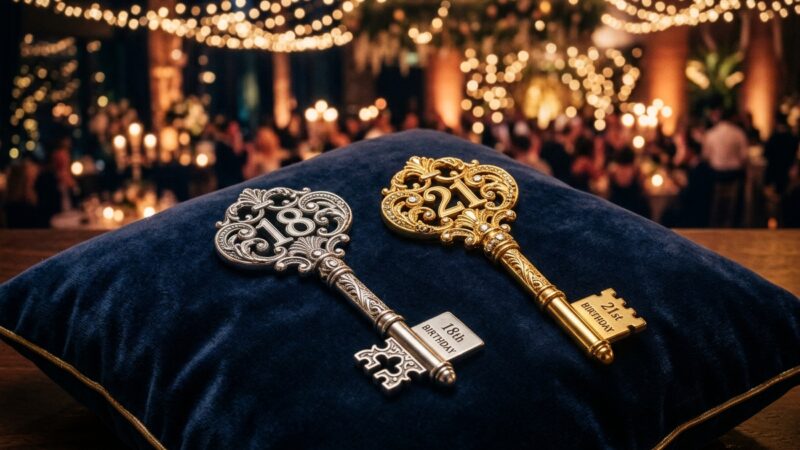
Here’s something interesting. In many English-speaking countries, there’s an old tradition of giving someone a symbolic key on their 21st birthday. The idea? You’re now mature enough to hold the “key to the family home” — meaning you can come and go as you please.
This tradition dates back to when 21 was the age of majority in England. Even though the legal age dropped to 18 in 1969, some British and Australian families still give a decorative key on the 21st birthday. It’s a beautiful example of how birthday traditions around the world stick around long after their original reasons fade.
18 vs 21: What’s the Real Difference?
This is where people get confused. If 18 makes you a legal adult, why does 21 even matter? Great question. Here’s a clear breakdown:
| Aspect | At 18 | At 21 |
|---|---|---|
| Voting | ✅ Yes (most countries) | Already have it |
| Military Service | ✅ Yes | Already eligible |
| Drinking (US) | ❌ No | ✅ Yes |
| Drinking (UK/Aus) | ✅ Yes | Already have it |
| Full Casino Access (US) | ❌ Limited | ✅ Yes |
| Car Rental (US) | ❌ Surcharges apply | ✅ Easier |
| Contract Signing | ✅ Yes | Already have it |
| Run for Congress (US) | ❌ Must be 25 | ❌ Must be 25 |
| Cultural Status | “New adult” | “Full adult” |
So the answer depends heavily on where you live. In the US, 21 carries more social weight because of the drinking age. In the UK, Australia, and most of Europe, 18 is the bigger deal because it unlocks everything at once.
Quick Fact: In some US states like Mississippi, the legal age of majority is actually 21 — not 18. So the “adult at 18” rule isn’t even universal within America.
The Psychology Behind Why These Birthdays Feel Different
There’s real science behind why your 18th and 21st birthdays feel more intense than, say, your 22nd or 23rd. Psychologists call these “landmark ages” or “milestone birthdays,” and they trigger something specific in our brains.
Identity Transition Points
According to research published in psychological journals, milestone birthdays force us to reevaluate our identity. You don’t just gain a year — you gain a new social category. At 18, you shift from “teenager” to “adult.” At 21, you shift from “young adult” to “fully recognized adult.”
These transitions create what psychologists call “temporal landmarks” — specific moments that divide your life into “before” and “after.” And your brain treats them differently than regular birthdays.
This is also why many people reflect on their life during birthdays — especially these big ones. You naturally start thinking about what you’ve done, where you’re headed, and who you want to become.
Social Pressure and Expectations
Let’s keep it real — there’s also pressure. Society tells you that at 18, you should “have a plan.” At 21, you should be “figuring things out.” These expectations can make these birthdays feel both exciting and overwhelming.
Some people thrive on this pressure. Others feel anxious. And that’s totally normal. The psychology behind birthday happiness shows that milestone birthdays produce stronger emotions in both directions — more joy for some, more stress for others.
Common Myths About 18th and 21st Birthdays
Let’s clear up some misconceptions that people genuinely believe:
Myth 1: “Turning 18 means complete freedom”
Not exactly. Yes, you’re a legal adult. But you can’t drink in the US until 21, can’t rent a car without surcharges until 21-25, and can’t run for most political offices until 25-35. Being 18 gives you many rights, not all rights.
Myth 2: “21 is the legal adult age everywhere”
Nope. In most countries, 18 is the legal age of majority. The 21-as-adulthood concept is largely an American cultural phenomenon, rooted in the drinking age. In the UK, Australia, Germany, France, India, and dozens of other countries, you’re fully legal at 18.
Myth 3: “Nothing meaningful changes at 21 outside the US”
Actually, even in countries where 18 is the legal age, 21 still holds cultural significance. Many families throw bigger parties at 21. The “key to the door” tradition exists in the UK, Australia, and New Zealand. And psychologically, 21 feels like a “real” adult age to many people regardless of the law.
Myth 4: “These birthdays should be the happiest days of your life”
Some people feel emotional, anxious, or even sad on these birthdays. That’s completely normal. The pressure of “this should be the best day ever” can actually backfire. If you’re someone who finds birthdays hard, you’re not alone — some people genuinely struggle with birthday celebrations.
How Different Generations Celebrate These Milestones
The way people celebrate 18th and 21st birthdays has changed a lot over the decades. Your grandparents’ 21st birthday party looked nothing like what Gen Z does today.
Baby Boomers and Gen X
For older generations, the 21st birthday was often a formal affair — a dinner with family, maybe a toast with champagne, and the symbolic “key” gift. It was a dignified transition. The 18th birthday was less emphasized in countries where 21 was still the voting age.
Millennials
Millennials started the trend of BIG 21st birthday parties — bar crawls, themed events, Vegas trips. They also popularized the “21st birthday crown” and “birthday sash” culture. Social media was growing, so birthday posts started becoming a thing.
Gen Z
Gen Z has taken it further. TikTok-worthy birthday content, Instagram birthday dumps, elaborate “18th birthday photoshoots” — celebrations now have a digital component that didn’t exist before. How birthday trends changed in Gen Z shows just how much social media has reshaped milestone celebrations.
The interesting thing? Despite all the digital noise, the emotional core remains the same. Whether it’s 1975 or 2025, turning 18 or 21 still feels like a big deal.
How to Make Your 18th or 21st Birthday Actually Meaningful
Beyond the parties and Instagram posts, here are some genuinely meaningful ways to mark these milestones:
For Your 18th Birthday:
- Write a letter to your future self — open it at 25 or 30
- Register to vote — it’s your first real act as a citizen
- Set up your first bank account or credit card independently
- Have an honest conversation with your parents about what adulthood means in your family
- Start a journal — you’ll thank yourself later when birthday memories become precious
For Your 21st Birthday:
- Create a “21 things I’ve learned” list — share it or keep it private
- Plan something YOU actually want — not what social media says you should do
- Do something you couldn’t do at 20 — even if it’s just ordering a drink at dinner
- Celebrate with people who genuinely matter to you
- Take proper photos — not just for social media, but for yourself. Birthday photos matter more than you think
Pro Tip: If you’re planning a party for someone turning 18 or 21, consider personalized birthday gifts over generic ones. A custom “key” necklace, an engraved wallet, or a photo book hits way harder than a gift card.
Why These Birthdays Hit Differently in 2025
We’re living in a time where “adulthood” feels delayed for many young people. The average age for buying a first home, getting married, and having children has gone up significantly compared to previous generations.
So what does turning 18 or 21 mean when you’re still living at home, still in school, and still financially dependent on your parents?
Honestly? It means the symbolic weight of these birthdays has gotten even heavier. Because the legal changes happen overnight, but the actual transition to independence takes years. There’s a gap between “legal adult” and “functioning adult” — and that gap is wider now than it’s ever been.
That’s exactly why these birthdays carry so much emotion. They represent a promise of independence, even if the reality takes time to catch up.
FAQ Section
Why is 18 considered a milestone birthday?
18 is a milestone because it’s the legal age of majority in most countries worldwide. On your 18th birthday, you gain the right to vote, sign contracts, join the military, and make independent legal decisions. It marks the official transition from minor to adult in the eyes of the law.
Why is 21 so important in the United States?
The 21st birthday matters in the US primarily because of the National Minimum Drinking Age Act of 1984, which set 21 as the legal drinking age nationwide. It also unlocks full access to casinos, removes many car rental restrictions, and culturally represents “full” adulthood in American society.
Do other countries celebrate the 21st birthday?
Yes, even in countries where 18 is the legal adult age, the 21st birthday still holds cultural importance. In the UK, Australia, and New Zealand, the “key to the door” tradition celebrates 21 as a symbol of full maturity. Many families worldwide throw bigger celebrations at 21 than at 18, regardless of legal significance.
What’s the “key of the door” tradition for 21st birthdays?
This is a tradition from English common law where a person turning 21 was given a large symbolic key, representing their right to come and go from the family home freely. Though the legal age of majority dropped to 18 in many countries, this tradition continues in families across the UK, Australia, and other Commonwealth nations.
Is turning 18 or 21 harder emotionally than other birthdays?
Research suggests yes — milestone birthdays trigger stronger emotional responses than regular ones. The pressure of expectations, the identity shift, and the awareness that “things are changing” can create a mix of excitement and anxiety that you don’t feel on a regular birthday. This is completely normal and experienced by most people.
Your Birthday, Your Meaning
At the end of it all, these numbers — 18 and 21 — carry weight because we give them weight. Laws, traditions, and cultural expectations pile on meaning to two specific days in your life. And that’s actually a beautiful thing.
Your 18th birthday tells you: the world now trusts you with real decisions. Your 21st birthday tells you: you’ve arrived, fully and completely. Both of them are rare moments where the entire society collectively agrees — today, something changed about you.
So whether you’re approaching one of these birthdays, planning a celebration for someone you love, or just curious about why people love their birthdays so much, remember this: the best way to honor a milestone birthday isn’t the size of the party. It’s understanding what it actually means — and stepping into it with your eyes open.
Make it count. You only turn 18 and 21 once. ✨
Related Articles
Twins’ Birthday Wishes: Double the Fun & Greetings
Celebrating two people at once is a special kind of joy. Whether you’re writing in a...

Thank You Messages: 100+ Replies for Birthday Wishes
Someone took a moment out of their day to think of you, type out a message,...
Best Friend Birthday Wishes: Top Heartfelt Messages
A good friend’s birthday deserves more than a rushed text or a recycled message you’ve sent...