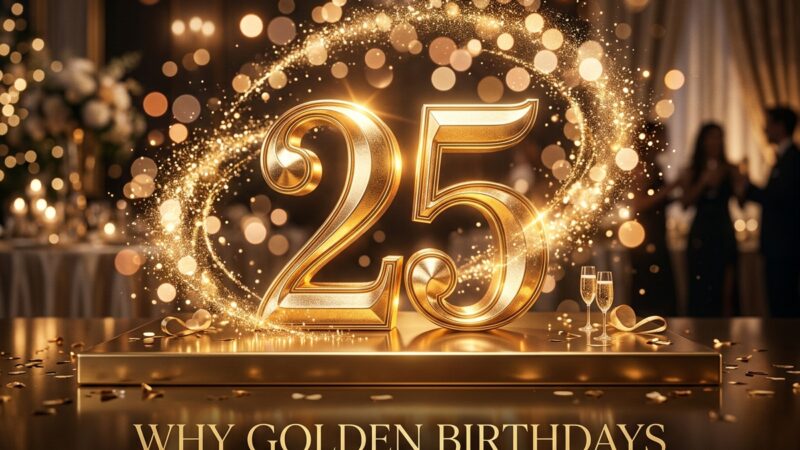
You turn 7 on the 7th. Or maybe 23 on the 23rd. That one-time match between your age and your birth date? That’s your golden birthday — and you only get one shot at it in your entire life.
A few decades ago, almost nobody talked about this. There was no hashtag, no TikTok trend, no special golden-themed party. But today, golden birthdays have turned into a full-blown cultural moment. People plan gold-themed bashes, buy glittery decorations, and post about it like it’s a once-in-a-lifetime event — because, well, it literally is.
So why golden birthdays became popular is a genuinely interesting question. How did a quirky little calendar coincidence turn into one of the most talked-about birthday milestones that matter most to an entire generation? Let’s break down the full story — the origin, the meaning, the social media explosion, and everything in between.
What Is a Golden Birthday? The Simple Explanation
Before we get into the “why,” let’s make sure the “what” is crystal clear.
A golden birthday — sometimes called a “lucky birthday” or “champagne birthday” — happens when your age matches the date you were born on. That’s it. Simple math, big hype.
Quick examples:
- Born on March 5th? Your golden birthday is when you turn 5.
- Born on October 21st? Your golden birthday hits at age 21.
- Born on December 1st? You celebrated yours at age 1 — and probably don’t remember it at all.
The golden birthday meaning is really about that one unique alignment. It can’t repeat. You can’t fake it. And depending on your birth date, your golden birthday might fall during childhood, your teenage years, or your twenties.
Did You Know? If you were born on the 31st, your golden birthday doesn’t arrive until you’re 31. That’s one of the latest possible golden birthdays anyone can have.
Some people also wonder about the difference between a golden birthday and a champagne birthday. Honestly? They’re the same concept. “Champagne birthday” is just more popular in parts of Canada, while “golden birthday” dominates in the U.S.
The Origin Story: Who Actually Invented This Idea?
Here’s where it gets interesting. The golden birthday concept didn’t come from ancient tradition or cultural ritual. It came from one woman in 1955.
Joan Bramsch, a mother from the Midwest (United States), came up with the idea when she was looking for a way to make each of her five children’s birthdays feel extra special. She noticed that each child would eventually have a birthday where their age matched their birth date. She called it the “Golden Birthday” and made it a family tradition — with golden decorations, special golden gifts, and a little extra fuss.
That’s it. No ancient Greek ritual. No royal decree. Just a creative mom in the 1950s.
For decades, this idea stayed relatively small — mostly a regional thing in parts of the American Midwest. Families passed it down. Some kids grew up hearing about it; most didn’t. If you ask people born in the 1960s or ’70s about golden birthdays, many will give you a blank look.
So how did a homegrown family tradition go from obscure Midwestern custom to global phenomenon? That’s the real story.
Why Golden Birthdays Became Popular: The 5 Key Reasons
The explosion didn’t happen overnight. Several forces combined over the past 15-20 years to push golden birthdays into the mainstream. Let’s look at each one.
1. Social Media Created the Perfect Stage
This is the biggest reason. Full stop.
Golden birthdays are inherently shareable. They’re visual (think gold balloons, gold outfits, gold cakes). They have a built-in “special” factor. And they come with a simple story anyone can understand in two seconds: “I’m turning 22 on the 22nd!”
When Instagram launched in 2010 and Pinterest followed closely behind, people suddenly had platforms designed for exactly this kind of content. A golden birthday post practically writes itself — the matching numbers, the golden aesthetic, the “once-in-a-lifetime” angle.
The hashtag #GoldenBirthday has racked up hundreds of millions of views across platforms. TikTok pushed it even further, with people creating countdowns, decoration hauls, and party reveal videos that rack up millions of views. You can explore more about how social media changed birthday culture entirely — golden birthdays are just one part of that bigger shift.
Pro Tip: If your golden birthday is coming up and you want to document it, start planning your content at least a month ahead. The anticipation posts often get as much engagement as the actual party posts.
2. Millennials and Gen Z Made Birthdays Into “Events”
There’s been a massive generational shift in how people treat birthdays. Older generations often kept birthday celebrations simple — dinner, cake, done. But Millennials and especially Gen Z turned birthdays into curated experiences.
Birthday weeks. Birthday photo shoots. Themed parties for adults. Birthday bucket lists.
Golden birthdays fit perfectly into this mindset. They gave people another reason to go all out, another “excuse” to make a regular birthday feel extraordinary. And because golden birthdays are mathematically unique, they added a layer of speciality that no other birthday tradition offered.
The way birthday trends changed in Gen Z is directly connected to why golden birthdays took off. This generation doesn’t just celebrate — they create moments worth sharing.
3. The “Scarcity” Factor Makes It Irresistible
Here’s some basic psychology for you: people value things more when they’re rare or limited.
Your golden birthday happens exactly once. Miss it, and it’s gone forever. You can’t reschedule it. You can’t have another one next year.
That built-in scarcity creates urgency. It taps into the same psychology behind birthday happiness that makes all birthdays feel meaningful — but amplifies it. People feel like they need to do something special because the opportunity won’t come back.
This FOMO effect (fear of missing out) is powerful. When someone sees their friend throw an amazing golden birthday party, they immediately think: “Wait, when’s mine? Did I miss it? Do I still have time?”
4. Party Supply and Gift Industries Jumped On Board
Money talks. And the party industry listened.
Once golden birthdays started trending online, companies saw dollar signs. Today, you can buy:
- Golden birthday-specific banners and decorations
- “It’s my Golden Birthday” sashes and tiaras
- Gold-themed party kits on Amazon and Etsy
- Customized golden birthday invitations on Canva
- Gold-foil birthday cakes from bakeries that specifically advertise “golden birthday” packages
The commercial ecosystem made it easier than ever to throw a golden birthday party. You didn’t have to be creative from scratch — you could just buy a pre-made golden birthday kit and you were set.
This commercialization created a feedback loop. More products → more visibility → more people learning about golden birthdays → more demand for products. The cycle kept growing.
5. It Filled a Gap Between “Regular” and “Milestone” Birthdays
Think about the birthdays we traditionally make a big deal out of: 1st, 13th, 16th (Sweet Sixteen), 18th, 21st, 30th, 40th, 50th…
But what about all the years in between? Turning 7 or 14 or 23 doesn’t normally feel special. Those birthdays can feel… forgettable.
Golden birthdays changed that. Suddenly, turning 14 on the 14th or 23 on the 23rd had a reason to be special. It gave ordinary birthdays a special identity.
People who love understanding why 18th and 21st birthdays are special can appreciate this: golden birthdays created a new kind of milestone that wasn’t about legal rights or cultural expectations — it was just about fun.
Golden Birthdays Around the World: Not Just an American Thing
While Joan Bramsch coined the term in the U.S., the concept has spread globally — especially through social media.
- Canada: The term “champagne birthday” is more common here, but the concept is identical.
- United Kingdom: Golden birthdays started gaining popularity around 2015-2018, mostly through Instagram.
- Australia: The trend picked up around the same time, with Australian party supply companies starting to stock golden birthday items.
- India and Southeast Asia: Growing awareness, especially among urban, social media-savvy young adults.
Different cultures already have their own unique birthday traditions around the world, and the golden birthday concept has layered on top of these existing customs rather than replacing them. A family in Japan might celebrate Shichi-Go-San (a traditional children’s celebration) AND acknowledge a golden birthday if the timing aligns.
What If You Missed Your Golden Birthday?
Here’s one of the most common questions people ask — and honestly, one of the biggest sources of disappointment around this trend.
If you were born on the 3rd, your golden birthday was at age 3. You definitely don’t remember it. If you were born on the 8th, you were 8 — old enough for a party, but probably nobody in your family had heard of golden birthdays back then.
So what do you do?
People have gotten creative:
- Double Golden Birthday: Some people celebrate when they turn double their birth date (born on the 12th → celebrate at 24).
- Silver Birthday: Turning 25, regardless of your birth date, as a nod to the “precious metal” birthday idea.
- Platinum Birthday: Turning the age of the year you were born (e.g., born in 1997 → celebrating at age 97… okay, that one’s ambitious).
- Reverse Golden Birthday: Flipping your birth date digits (born on the 21st → celebrating at 12).
None of these are “official” — but then again, the golden birthday itself started as one mom’s creative idea. There are no rules here. Make your own tradition.
Pro Tip: If you missed your golden birthday, throw a “belated golden” party anyway. Use the gold theme, lean into the humor of being “fashionably late” to your own golden birthday, and enjoy it. Nobody’s checking your math at the door.
Common Myths and Misconceptions About Golden Birthdays
Let’s clear up some confusion that floats around this topic.
Myth #1: “Golden Birthdays Are an Ancient Tradition”
Nope. As we covered, Joan Bramsch came up with the concept in 1955. There’s no connection to ancient civilizations, astrology, or numerology — even though some websites try to make that connection. It’s not related to zodiac signs or any spiritual system.
Myth #2: “Golden Birthdays Bring Good Luck”
This is a fun belief, but there’s zero evidence for it. Some people tie it into birthday superstitions — like making a wish when you blow out candles — but a golden birthday doesn’t carry any proven mystical power. It’s special because you decide to make it special.
Myth #3: “If You Miss It, You Can Never Celebrate It”
Wrong again. Your golden birthday year only comes once, sure. But celebrations aren’t governed by laws. Throw a golden party whenever you want. Celebrate the concept, the aesthetic, the fun of it. Plenty of adults throw golden birthday parties years after their actual golden birthday.
Myth #4: “Everyone Knows About Golden Birthdays”
You’d be surprised how many people have never heard the term. Golden birthdays are popular online, but in everyday conversation, plenty of people still have no idea what you’re talking about. This is especially true for people over 45 or those who aren’t active on social media.
The Psychology of Why We Love Golden Birthdays
Why does this concept resonate so deeply? A few psychological principles are at play.
Pattern recognition: Human brains are wired to notice patterns. When your age matches your date, your brain lights up — “Hey, those numbers match!” It feels meaningful even if it’s just coincidence.
Narrative identity: People love stories about themselves. A golden birthday gives you a mini-narrative — “This is MY special year.” It taps into the same reason people reflect on life during birthdays. Your golden birthday becomes a chapter marker in your personal story.
Social belonging: When you post about your golden birthday, you join a community of people who’ve done the same. That shared experience creates connection. It’s similar to why people share birthday posts on social media in general — but golden birthdays add an extra layer of “uniqueness” to the post.
The celebration instinct: Humans are wired to celebrate. We look for reasons to mark occasions, gather people, and feel joy. Golden birthdays give us one more reason — and that’s why people love their birthdays so much in the first place.
How to Celebrate Your Golden Birthday (Practical Ideas)
If your golden birthday is coming up — or if you’re planning one for someone you love — here are some ideas that actually work.
For Kids (Ages 1-12):
- Gold-themed treasure hunt party
- Golden ticket invitations (Willy Wonka style)
- Gold star stickers and prizes for party games
- A golden crown for the birthday kid
For Teens (Ages 13-19):
- Gold dress code for all guests
- Gold photo booth backdrop for Instagram-worthy pics
- Golden balloon arch (surprisingly affordable on Amazon)
- A golden birthday cake with matching number candles — and yes, the history of birthday cakes and candles makes this tradition even cooler
For Adults (Ages 20-31):
- Gold-themed cocktail party
- Champagne toast at the golden hour (sunset)
- A “golden memories” jar where guests write their favorite memory with you
- Gold outfits and accessories for a night out
- Custom golden birthday playlist
Budget-Friendly Golden Birthday Ideas:
- Gold streamers and balloons from the dollar store
- DIY gold spray-painted mason jars as centerpieces
- Golden hour picnic in a park
- Gold-frosted cupcakes you bake yourself
- A simple gathering with close friends wearing something gold
Golden Birthdays vs. Other Special Birthday Types
The golden birthday isn’t the only “special” birthday concept out there. Here’s how it stacks up:
| Birthday Type | What It Means | When It Happens |
|---|---|---|
| Golden Birthday | Age matches birth date | Once per lifetime |
| Champagne Birthday | Same as golden birthday | Once per lifetime |
| Silver Birthday | Turning 25 | At age 25 |
| Diamond Birthday | Turning 60 or 75 | Varies by culture |
| Star Birthday | Birthday falls on birth day of the week | Every 5-7 years |
| Milestone Birthday | Culturally significant age (18, 21, 30, 50) | Multiple times |
Golden birthdays stand out because they’re the most personalized. Your golden birthday is different from your friend’s golden birthday. That individuality is part of the appeal.
The Role of TikTok and Pinterest in the Golden Birthday Boom
We can’t talk about why golden birthdays became popular without giving specific credit to these two platforms.
Pinterest (early 2010s) became the go-to place for golden birthday party planning. Search “golden birthday” on Pinterest and you’ll find thousands of boards with decoration ideas, cake designs, outfit inspiration, and party favor concepts. Pinterest essentially became the golden birthday planning headquarters.
TikTok (late 2010s-2020s) took things further. The platform’s short-video format was perfect for:
- Golden birthday reveal videos
- Decoration time-lapses
- “Get ready with me” golden birthday content
- Party haul videos showing golden-themed purchases
- Emotional reaction videos
Some of the most viral birthday trends on TikTok are directly tied to the golden birthday concept. The hashtag continues to grow year after year.
FAQ Section
What does “golden birthday” mean exactly?
A golden birthday is the one time in your life when your age matches the calendar date you were born on. If you were born on June 15th, your golden birthday is when you turn 15 years old. The term was created by Joan Bramsch in 1955, and it’s also known as a “lucky birthday” or “champagne birthday” in some regions.
What if my golden birthday already passed and I didn’t celebrate it?
That’s totally okay — and you’re not alone. Most people born on dates 1-12 had their golden birthday during early childhood and didn’t even know about the concept. You can celebrate a “belated golden birthday” anytime, throw a gold-themed party at any age, or create your own variation like a “double golden birthday” (twice your birth date). There are no official rules — just have fun with it.
Is a golden birthday the same as a champagne birthday?
Yes, they’re identical concepts. “Champagne birthday” is more commonly used in Canada, while “golden birthday” is the preferred term in the United States. Both refer to the birthday when your age equals your birth date. The only difference is the name — the celebration and meaning are exactly the same.
Are golden birthdays actually lucky?
There’s no scientific evidence that golden birthdays bring good luck. The idea is rooted in fun and celebration, not superstition or spirituality. Some people attach personal significance to the number match, but it’s a modern tradition based on a creative family idea from the 1950s — not an ancient belief system.
When is the latest possible golden birthday?
The latest golden birthday anyone can have is at age 31, which applies to people born on the 31st of months like January, March, May, July, August, October, or December. People born on the 1st have the earliest golden birthday — at just 1 year old.
Your Golden Birthday Is What You Make of It
Here’s the thing about golden birthdays that makes them genuinely special: the concept only works if you choose to care about it.
No government recognizes it. No religion celebrates it. No ancient scroll mentions it. A creative mom from the American Midwest dreamed it up because she wanted her kids’ birthdays to feel a little more magical. And somehow, that simple idea — fueled by social media, generational shifts in how we celebrate, and our deep human love for patterns and meaning — turned into a global phenomenon.
Whether your golden birthday is ahead of you, behind you, or happening this year, the real takeaway is this: any birthday can be golden if you put intention behind it. The gold decorations are fun, the matching numbers are cool, but what actually matters is that you stopped for a moment, recognized the day, and celebrated being alive for another trip around the sun.
So go ahead — check your birth date, do the math, and figure out yours. And if it’s already passed? Throw that gold-themed party anyway. Nobody’s going to stop you.
Related Articles
Twins’ Birthday Wishes: Double the Fun & Greetings
Celebrating two people at once is a special kind of joy. Whether you’re writing in a...
Thank You Messages: 100+ Replies for Birthday Wishes
Someone took a moment out of their day to think of you, type out a message,...
Best Friend Birthday Wishes: Top Heartfelt Messages
A good friend’s birthday deserves more than a rushed text or a recycled message you’ve sent...