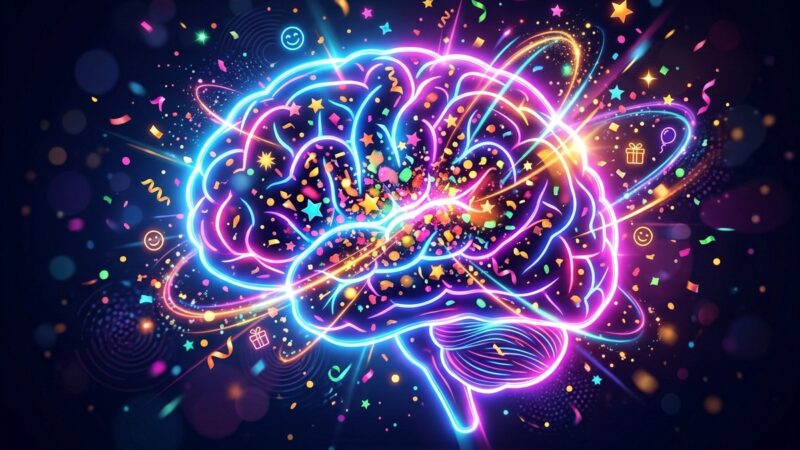
A 2023 study by the American Psychological Association found that people experience a measurable spike in positive emotions up to three days before their birthday — not just on the day itself. Your brain literally starts preparing for happiness ahead of time.
Think about that for a second. Your mind doesn’t wait for the cake, the gifts, or the “Happy Birthday” chorus. It starts the celebration early, all on its own. And that tells us something powerful about the psychology of birthdays.
But here’s what most people don’t think about — why? Why does a simple date on the calendar trigger such strong emotions? You didn’t achieve anything new. You didn’t earn a promotion. You just… survived another year. Yet your brain treats it like a reward event.
The answer lives deep inside your psychology, your brain chemistry, and your social wiring. And once you understand it, you’ll look at birthdays — yours and everyone else’s — very differently.
Let’s break this down, piece by piece.
What Happens in Your Brain on Your Birthday
Your birthday isn’t just an emotional event. It’s a neurological one.
When you wake up on your birthday and see those messages flooding your phone, your brain releases dopamine — the same chemical that fires when you eat your favorite food or get a notification that someone liked your post. Neuroscientist Dr. Robert Sapolsky from Stanford University has explained that dopamine isn’t just about pleasure. It’s about anticipation of pleasure.
That’s why people often feel emotional on their birthday — the emotional buildup starts days before. Your brain has learned, through years of repetition, that “birthday = good things coming.”
The Dopamine Anticipation Loop
Here’s how it works in simple terms:
- Memory triggers: Your brain connects the date with past birthday experiences — cake, presents, attention, love.
- Dopamine release: Based on those memories, your brain starts producing dopamine in anticipation.
- Heightened attention: You become more aware of positive stimuli around you — a kind text, a surprise plan, even the weather feeling nicer.
- Reward confirmation: When good things actually happen on the day, the loop strengthens for next year.
This is called a conditioned reward response. Your brain has been trained, birthday after birthday, to associate this date with happiness. Even if one birthday was bad, dozens of good ones keep the pattern strong.
Serotonin and Social Connection
Dopamine isn’t working alone. Serotonin — the mood-regulating chemical — also gets a boost. Why? Because birthdays are inherently social events. People reach out to you. They remember you. They celebrate you.
Dr. Matthew Lieberman, a social cognitive neuroscientist at UCLA, has shown that social recognition activates the same brain regions as physical warmth. Literally — being acknowledged on your birthday feels like being wrapped in a warm blanket, neurologically speaking.
Quick Fact: Brain imaging studies show that receiving birthday wishes activates the ventral striatum, the brain’s primary reward center. The same area lights up when you receive unexpected money.
The “Main Character” Effect: Why Being the Center of Attention Feels So Good
Let’s be honest. Most days, you’re just… living. Going to work, paying bills, doing laundry. Nobody’s making a fuss about your existence.
But on your birthday? You’re the main character.
And your brain loves it.
Psychologist Abraham Maslow identified “esteem needs” as a core human motivation — the need to feel valued, respected, and recognized. On regular days, these needs get partially met through work achievements, friendships, or social media validation. But on your birthday, they get met all at once.
Why This Matters Psychologically
- Self-worth validation: People are celebrating your existence. Not your work, not your achievements — just you. That hits different.
- Belonging confirmation: When friends and family show up, it confirms you matter to your tribe. Evolutionary psychology says this is deeply reassuring because, thousands of years ago, being valued by your group meant survival.
- Temporary narcissism boost: And that’s okay. Psychologist Dr. Craig Malkin distinguishes between healthy narcissism (feeling special sometimes) and unhealthy narcissism (needing to feel special always). Your birthday is the one day where healthy narcissism gets full permission.
This “main character” effect is also why people love sharing birthday posts on social media. It’s not vanity. It’s your brain seeking public confirmation of your social value.
Did you know? Research from Carnegie Mellon University found that personalized birthday messages on social media — not just generic “HBD” — actually increased the recipient’s sense of well-being for up to two weeks after their birthday.
The Role of Nostalgia in Birthday Happiness
Here’s something interesting about birthday emotions psychology that most articles skip over: a huge chunk of your birthday happiness isn’t about the present moment. It’s about the past.
Birthdays are one of the most powerful nostalgia triggers in human experience. Dr. Constantine Sedikides, a leading nostalgia researcher at the University of Southampton, has found that nostalgia serves three psychological functions:
- It boosts self-continuity — You feel connected to who you were, which makes you feel more grounded in who you are.
- It increases social connectedness — Remembering past birthdays reminds you of the people who’ve been in your life.
- It gives life meaning — Looking back at birthday memories creates a narrative arc. You see growth, change, and survival.
Why Birthday Memories Feel So Vivid
Your brain uses something called flashbulb memory for emotionally charged events. Your 16th birthday party. The cake your mom made when you were 7. The surprise your best friend organized last year. These aren’t stored like regular memories. They’re stored with more sensory detail — the smell, the colors, the sounds.
That’s why the science behind birthday memories is so fascinating. Your brain literally categorizes birthday memories as “important” and preserves them with higher fidelity than, say, what you had for lunch last Tuesday.
The Bittersweet Element
Nostalgia isn’t purely happy. It’s a mix. And that mix is actually part of why it feels so rich. Psychologists call this “bittersweet affect” — the coexistence of joy and gentle sadness. You’re happy you’ve lived another year. You’re a little sad about the years gone by. People you’ve lost. Things that changed.
This bittersweet quality is why some people reflect deeply on life during their birthdays. It’s not depression. It’s your brain doing something very healthy — making meaning.
The Social Psychology of Birthday Rituals
Birthday happiness doesn’t happen in a vacuum. It’s deeply connected to rituals — and rituals have enormous psychological power.
Think about what a birthday involves:
- People sing a specific song (the same one, every year, worldwide)
- There’s a cake with candles
- You make a wish
- People give you gifts
- There might be a party with a specific structure
None of these things are random. They’re ritualized behaviors, and Harvard Business School research (led by Francesca Gino and Michael Norton) has shown that rituals increase enjoyment of experiences — even if the ritual itself is arbitrary.
Why Rituals Amplify Emotion
In a 2013 study published in Psychological Science, Gino and Norton found that people who performed a simple ritual before eating chocolate rated the chocolate as more enjoyable and were willing to pay more for it. The ritual didn’t change the chocolate. It changed the experience of eating it.
Birthday rituals work the same way. The candles, the song, the wish — they don’t logically make your day better. But psychologically, they create:
- Heightened attention: The ritual forces you to be present. You’re focused on blowing out candles, not thinking about tomorrow’s meeting.
- Emotional amplification: Rituals create a “frame” around an experience, making it feel more significant.
- Shared experience: When everyone sings together, it creates a micro-moment of group synchrony, which social psychologists link to bonding and trust.
The origin of birthday cakes and candles goes back centuries, and the fact that these rituals have survived so long tells you how deeply humans need them.
Pro Tip: If you want to make someone’s birthday feel more special, don’t skip the rituals. Even if they say “don’t sing for me” — the ritual still matters psychologically. Maybe find an alternative ritual that suits their personality. For introverts who celebrate differently, a handwritten letter can serve as a powerful ritual substitute.
The Milestone Effect: Why Certain Birthdays Hit Harder
Not all birthdays feel the same. You know this from experience.
Your 10th birthday? Exciting — double digits! Your 18th? Freedom, adulthood, identity. Your 30th? Existential crisis or celebration, depending on who you ask. Your 50th? A full-blown reckoning with time.
Psychologists call these “temporal landmarks”, and research by Hengchen Dai, Katherine Milkman, and Jason Riis (published in Management Science, 2014) shows that people use these landmarks to mentally organize their lives. They create a “before” and “after.”
The “Fresh Start” Effect
This is the most fascinating part. Temporal landmarks — including milestone birthdays — trigger what’s called the “fresh start effect.” Your brain treats the new age as a new chapter, which creates:
- Increased motivation to set goals
- Higher likelihood of starting new habits
- A temporary feeling of separation from past failures
That’s why people join gyms in January, start diets on Mondays, and make big life decisions around birthday milestones that matter most. Your brain genuinely perceives these markers as psychological reset buttons.
Why 18th and 21st Birthdays Feel So Special
These particular ages carry extra weight because they combine temporal landmarks with legal and social transitions. You can vote, drink (in the US at 21), sign contracts, be fully independent. The psychology here isn’t just about the number — it’s about identity shift. You’re crossing from one social category (child/teen) into another (adult).
Erik Erikson, the developmental psychologist, described these transitions as part of his “psychosocial stages” theory. The shift from adolescence to young adulthood involves resolving the crisis of identity vs. role confusion. Milestone birthdays become the symbolic moments where that resolution feels most real.
The Dark Side: Why Birthdays Don’t Make Everyone Happy
We need to talk about the flip side because it’s psychologically important.
Not everyone feels happy on their birthday. For some people, the day brings anxiety, sadness, or even dread. This isn’t uncommon, and it has a name: “birthday blues” (sometimes called “birthday depression”).
A study published in Social Science & Medicine found that mortality rates actually increase slightly on and around birthdays, particularly for older adults. Researchers attribute this to the psychological stress of confronting aging and mortality.
Why Some People Struggle on Their Birthday
- Unmet expectations: You expected a grand celebration. You got three text messages and a forgotten dinner reservation. The gap between expectation and reality causes disappointment.
- Social comparison: “By this age, I should have…” — this kind of thinking intensifies on birthdays because the date forces self-evaluation.
- Loneliness amplification: If you already feel socially isolated, a birthday magnifies that feeling. The day should be about connection, so the absence of it hurts more.
- Aging anxiety: Each birthday is a reminder that time is passing. For people with unresolved goals or fears about aging, this can be genuinely distressing.
If you want to understand this more deeply, there’s a thoughtful piece on why some people hate celebrating birthdays that covers the psychological roots of birthday avoidance.
Important Note: If birthday sadness feels overwhelming or lasts beyond a few days, it might be worth talking to a mental health professional. Situational sadness is normal. Prolonged distress is a signal worth paying attention to.
The Gift-Giving Psychology: Why Presents Create Such Strong Emotions
Gifts are a core part of birthday happiness, but not for the reasons you might think.
Most people assume gifts make you happy because of the object itself. But psychological research tells a different story. It’s not about what you receive. It’s about what the gift represents.
What Gifts Really Communicate
Dr. Ellen Langer, a social psychologist at Harvard, has written extensively about the psychology of gift-giving. Her work suggests that a gift communicates three things:
- “I was thinking about you” — This is the most powerful message. Someone spent time, energy, and money because you matter to them.
- “I know you” — A well-chosen gift shows understanding. That’s why personalized birthday gifts feel so special — they say “I pay attention to who you are.”
- “You deserve good things” — Receiving a gift is permission to enjoy something you might not have bought yourself.
The “Thought That Counts” Is Real Science
People often say “it’s the thought that counts” as if it’s just a polite phrase. But a 2018 study in the Journal of Experimental Social Psychology confirmed it: recipients consistently valued the effort and thoughtfulness behind a gift more than its monetary value.
A handwritten birthday card with specific, personal words triggered more positive emotion than an expensive but generic gift. Your brain responds to intentionality, not price tags.
Birthday Happiness Across Different Ages and Life Stages
The psychology of birthdays shifts dramatically as you age. A 5-year-old and a 50-year-old experience birthday happiness through completely different psychological lenses.
Children (Ages 3-12): Pure Anticipatory Joy
Kids experience birthdays with almost zero emotional complexity. It’s straightforward: cake + presents + party = happiness. Their brains haven’t developed the capacity for self-reflection or social comparison yet, so there’s no “birthday blues.” Just excitement.
This is why kids get more excited for birthdays than adults — their emotional processing is simpler, and their dopamine response to novelty and rewards is stronger.
Teens and Young Adults (Ages 13-25): Identity + Social Status
At this stage, birthdays become tied to social identity. How many people came to your party? What did you post on Instagram? Did you feel popular, loved, seen?
The psychology here connects to Erikson’s identity development stage. Teens use birthdays as social benchmarks.
Middle Adulthood (Ages 30-55): Reflection + Meaning
Birthday happiness in this phase often depends on life satisfaction. If you feel good about where you are — career, relationships, health — your birthday amplifies that. If you feel behind, the birthday can trigger what psychologists call “the comparison gap.”
Why birthdays feel faster as you age plays into this too. The proportional theory of time perception (proposed by psychologist William James over a century ago) suggests that each year becomes a smaller fraction of your total life, making birthdays seem to arrive faster.
Older Adults (Ages 60+): Gratitude + Legacy
Something beautiful happens psychologically in later life. Research by Laura Carstensen (Stanford’s Socioemotional Selectivity Theory) shows that older adults shift toward gratitude and emotional prioritization. Birthdays become less about parties and gifts, and more about being alive, being surrounded by loved ones, and reflecting on legacy.
Many older adults report that their birthday happiness is quieter but deeper than what they felt at younger ages.
Common Myths About Birthday Psychology
Let’s clear up a few misconceptions:
Myth 1: “Extroverts enjoy birthdays more than introverts.”
Not exactly. Research shows introverts enjoy birthdays just as much — they just prefer different types of celebration. A quiet dinner with two close friends can produce the same dopamine response as a 50-person party. The key variable isn’t the size of the celebration; it’s whether it aligns with the person’s social preferences.
Myth 2: “Birthday happiness is just commercialism.”
While companies obviously market around birthdays, the emotional response is rooted in genuine psychological needs — belonging, recognition, self-reflection, nostalgia. These existed long before Hallmark cards. Birthday traditions around the world show that cultures with no commercial birthday industry still celebrate with deep emotional significance.
Myth 3: “You shouldn’t feel sad on your birthday — something’s wrong with you.”
Absolutely false. Mixed emotions on birthdays are normal and psychologically healthy. The bittersweet blend of joy and reflection is a sign of emotional maturity, not dysfunction.
Myth 4: “Birthday happiness peaks in childhood and only declines after that.”
Research doesn’t support a simple decline. Birthday happiness fluctuates based on life circumstances, personality, and social support. Many people report their happiest birthday was in their 40s, 50s, or even 60s.
How to Increase Your Own Birthday Happiness (Based on Psychology)
Since we now understand what drives birthday emotions psychology, here are science-backed ways to make your birthday genuinely happier:
1. Set Realistic Expectations
The biggest predictor of birthday disappointment is the gap between what you expected and what happened. Psychologist Barry Schwartz’s research on the “paradox of choice” applies here — sometimes scaling down expectations leads to more satisfaction, not less.
2. Prioritize Experiences Over Things
Dr. Thomas Gilovich at Cornell has shown repeatedly that experiences produce longer-lasting happiness than material purchases. A birthday hike with your best friend will likely bring more joy than an expensive gadget.
3. Create or Maintain at Least One Ritual
Even a small one. The same restaurant every year. A specific birthday breakfast. A phone call with a specific person. Rituals anchor your birthday in meaning.
4. Practice Intentional Reflection
Instead of letting self-evaluation happen passively (which often turns negative), take 15 minutes to write down what you’re grateful for from the past year. This shifts your brain from comparison mode to appreciation mode.
5. Connect with Someone You Haven’t Talked to in a While
Your birthday gives you a natural reason to reach out. And social connection is the single strongest predictor of happiness — not just on your birthday, but in life.
6. Give Something to Someone Else
Counterintuitive? Maybe. But research by Elizabeth Dunn at the University of British Columbia shows that spending on others produces more happiness than spending on yourself. Buy your mom flowers on your birthday. Watch what happens to your mood.
FAQ Section
Why do birthdays make us happy from a psychological perspective?
Birthdays trigger happiness through multiple psychological mechanisms: dopamine release from anticipation and reward, serotonin boosts from social connection, esteem need fulfillment from being the center of attention, nostalgia activation from birthday memories, and the “fresh start effect” from temporal landmarks. Your brain has also been conditioned over years of positive birthday experiences to associate the date with pleasure.
Is it normal to feel sad on your birthday?
Yes, completely normal. Psychologists recognize “birthday blues” as a common experience. Birthdays force self-evaluation, which can trigger social comparison, aging anxiety, or awareness of unmet goals. Mixed emotions — feeling happy and sad simultaneously — are actually a sign of emotional depth, not a problem. If sadness becomes prolonged or overwhelming, consider speaking with a mental health professional.
Why do milestone birthdays (like 30 or 50) feel more significant?
Milestone birthdays function as “temporal landmarks” in your brain’s mental timeline. Research shows these landmarks trigger the “fresh start effect,” where your brain perceives a new chapter beginning. They also carry cultural and social weight — society has attached specific meanings to ages like 18, 21, 30, and 50. The combination of personal psychology and cultural expectation makes these birthdays feel heavier and more meaningful.
Do birthday celebrations actually improve mental health?
Research suggests that positive birthday celebrations — ones that involve genuine social connection, reasonable expectations, and meaningful rituals — do provide measurable mental health benefits. They reinforce social bonds, boost self-worth, and provide opportunities for healthy nostalgia. The effects are temporary but real, with some studies showing mood improvements lasting one to two weeks after a positive birthday experience.
Why do some people stop enjoying birthdays as they get older?
Several psychological factors contribute: increased awareness of mortality, accumulation of unmet expectations, social comparison intensifying with age, and the phenomenon of time perception speeding up. Some adults also associate birthday celebrations with childishness and feel social pressure to “act their age.” Understanding these factors can help — many people rediscover birthday joy by shifting their focus from achievement-based evaluation to gratitude-based reflection.
Your Birthday Is More Than a Date
Here’s what it all comes down to. Your birthday happiness isn’t random. It’s not just “fun” or “nice.” It’s a complex psychological event where your brain chemistry, social needs, memories, identity, and cultural rituals all converge on a single day.
The fact that humans across every culture and every era have found ways to mark birthdays tells you something profound about our species. We need to celebrate existence itself. Not achievements. Not milestones. Just the simple, extraordinary fact of being alive for another year.
So the next time your birthday rolls around — whether you’re the type who throws a massive party or the type who prefers a quiet evening with a book and a slice of cake — know that whatever you’re feeling is valid. The happiness, the nostalgia, the hint of sadness, the gratitude. That’s your brain doing exactly what it’s designed to do.
And that’s worth celebrating.
Related Articles
Twins’ Birthday Wishes: Double the Fun & Greetings
Celebrating two people at once is a special kind of joy. Whether you’re writing in a...

Thank You Messages: 100+ Replies for Birthday Wishes
Someone took a moment out of their day to think of you, type out a message,...
Best Friend Birthday Wishes: Top Heartfelt Messages
A good friend’s birthday deserves more than a rushed text or a recycled message you’ve sent...