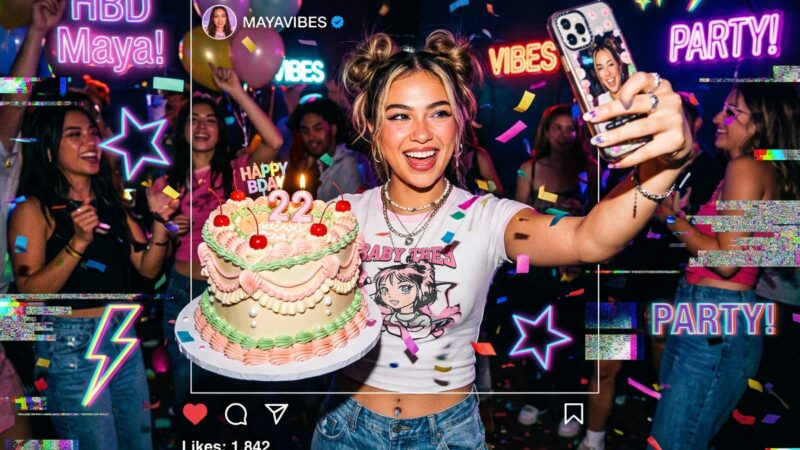
A 2024 Eventbrite survey found that 73% of Gen Z would rather spend money on a birthday experience than a birthday gift. Think about that for a second. Your parents probably got a cake, a card, and maybe a dinner at a nice restaurant. That was the formula. It worked for decades.
But Gen Z — the generation born between 1997 and 2012 — tore up that playbook. How birthday trends changed in Gen Z isn’t just about swapping one party style for another. It’s a complete shift in what birthdays mean. The celebration moved from the dining table to the phone screen, from material gifts to emotional moments, and from big loud parties to curated personal experiences.
If you’re a Gen Z member trying to plan something that actually feels right, a parent confused about what your kid wants, or just someone curious about how birthday parties changed over time, this piece will make everything click. Let’s get into it.
Gen Z Birthday Culture: How Did We Get Here?
To understand Gen Z birthday culture, you’ve got to understand the world this generation grew up in. They didn’t “adopt” social media — they were born into it. Instagram launched in 2010, TikTok went global around 2018, and Snapchat became a daily habit somewhere in between.
That changes everything about how you see yourself, how you present yourself, and yes — how you celebrate yourself.
The Social Media Foundation
For Millennials, a birthday was mostly an offline event. You’d maybe post a Facebook status. Maybe upload a blurry album the next day.
For Gen Z? The birthday is the content. The outfit, the location, the decor, the captions, the Instagram stories, the TikTok montage — all of it is part of the celebration itself. It’s not vanity. It’s just how this generation communicates and creates memories.
And social media has genuinely changed birthday culture in ways that go beyond just posting photos. It’s shaped expectations, planning, gifting, and even emotions around birthdays.
The Experience Economy Effect
Here’s a stat that tells you a lot: according to a Harris Poll study, 78% of Gen Z prefers spending on experiences over things. Birthday celebrations followed that shift naturally.
Instead of a pile of wrapped gifts, Gen Z gravitates toward:
- Travel trips — even short weekend getaways
- Concert or festival outings with friends
- Aesthetic dinners at trending restaurants
- Activity-based parties — pottery, painting, escape rooms
- Solo “treat yourself” days — spa, self-care, nature
The gift is the memory, not the object.
5 Biggest Ways Gen Z Birthday Celebrations Look Different
So let’s break down the actual changes. Because how birthday trends changed in Gen Z isn’t just one thing — it’s a collection of shifts that all happened around the same time.
1. The Rise of the “Birthday Month” (and Birthday Week)
Older generations had a birthday day. Maybe a dinner the weekend after. That was it.
Gen Z stretched the celebration. The concept of a “birthday week” or even a “birthday month” is now completely normal. You’ll see Instagram bios updated to “birthday szn 🎂” weeks before the actual date.
This isn’t about being self-centered. It’s about extending joy and giving yourself multiple types of celebrations — a dinner with close friends, a family gathering separately, a solo self-care day, and maybe a group outing. Each gets its own moment.
🔑 Pro Tip: If you’re planning something for a Gen Z friend, don’t stress about doing everything on the exact date. They’ll probably appreciate a thoughtful gesture any time during their “birthday window.”
2. Themed and Aesthetic Parties Over Big Blowouts
Remember those huge house parties with 100+ people? That’s more of a Millennial (or even Gen X) thing. Gen Z birthday celebrations tend to be smaller, more intentional, and heavily themed.
Think:
- Cottagecore picnic in a park with vintage blankets
- Y2K themed party with early 2000s fashion
- “That Girl” aesthetic brunch setup
- Studio Ghibli or anime-inspired decor
- Disco/70s glam dinner parties
The vibe matters more than the headcount. A party for 8 people with matching color schemes, coordinated outfits, and a perfectly arranged dessert table beats a chaotic house party every time — at least in Gen Z’s eyes.
And honestly? This tracks with what we know about why birthday photos matter to people. The visual memory is part of the emotional memory. Gen Z just made that connection more deliberately.
3. TikTok as the Birthday Planning Tool
Google used to be where you’d search for party ideas. Pinterest had its moment too. But for Gen Z, TikTok is the primary source of birthday inspiration.
The most viral birthday trends on TikTok have shaped real-life celebrations in a huge way. Some trends that blew up:
- Birthday countdown videos — a short clip every day leading up to the date
- “Get ready with me” birthday edition — showing the outfit, makeup, and setup process
- Gift unboxing videos — opening presents on camera
- Birthday dump carousels — a curated photo set posted on Instagram after the day
- Surprise reaction videos — capturing genuine shock moments
These aren’t just trends for content creators. Regular people — with 200 followers — do these things too. TikTok normalized turning your birthday into a visual story.
📌 Did You Know? The hashtag #birthdaytiktok has over 4.5 billion views as of early 2025. That’s not a niche — that’s a cultural wave.
4. Solo Birthdays Are No Longer Sad
This might be the biggest mindset shift. For previous generations, spending your birthday alone felt like failure. Something was wrong if you didn’t have people around you.
Gen Z flipped that completely.
Solo birthday celebrations are now a choice, not a consolation prize. A Gen Z person might:
- Book a solo hotel staycation
- Go on a solo hike or beach day
- Spend the day at a bookstore and café
- Take themselves to a movie or museum
- Do a full self-care ritual at home
This tracks with broader Gen Z values around mental health, self-awareness, and boundary setting. They don’t equate being alone with being lonely. If anything, it’s the ultimate form of self-love.
And if you think about it, this connects to why some people prefer not celebrating at all — but with Gen Z, skipping the party doesn’t mean skipping the celebration. It just means celebrating differently.
For those who genuinely vibe with quieter celebrations, there are great birthday celebration ideas for introverts that Gen Z has practically turned into an art form.
5. Digital Gifts and Experiences Over Physical Ones
The most popular birthday gifts by age have changed dramatically for Gen Z. Physical gifts still exist, of course. But the gifting culture shifted toward:
- Digital gift cards (Spotify, Amazon, Uber Eats, gaming platforms)
- Subscription services (Netflix, streaming, app subscriptions)
- Cash transfers via Venmo, Cash App, PayPal — with no shame attached
- Donation requests — asking friends to donate to a cause instead of gifting
- Experience vouchers — concert tickets, cooking classes, spa passes
Here’s what’s interesting: Gen Z removed the guilt around asking for money. Previous generations considered it “rude” to say “just send me cash.” Gen Z made it practical and normalized. A birthday Venmo link in the Instagram bio? Totally standard.
The Emotional Side: How Gen Z Feels About Birthdays
This is where it gets deeper. Because how birthday trends changed in Gen Z isn’t just about logistics and party planning. The emotional relationship with birthdays shifted too.
Birthday Anxiety Is Real (and Talked About)
Gen Z is the first generation to openly discuss birthday depression and birthday anxiety on public platforms. Older generations felt it too — that weird sadness that sometimes hits on your birthday — but they didn’t have the vocabulary or the permission to talk about it.
Gen Z does.
Scroll through Twitter or TikTok around any given week, and you’ll find people posting honestly:
“Tomorrow’s my birthday and I’m already dreading it.”
“Why do I always cry on my birthday?”
“Birthday anxiety is so real, please normalize not being okay.”
The psychology behind this is actually well-documented. Why people feel emotional on their birthday isn’t a Gen Z invention — but Gen Z made it a public conversation. That matters because it reduces shame and helps people process those feelings.
Reflection Over Celebration
Another emotional trend: Gen Z uses birthdays as a checkpoint for self-reflection more than pure celebration.
You’ll see lengthy Instagram captions or Notes app screenshots where someone reflects on their past year — what they learned, what hurt, what they’re grateful for, what they’re leaving behind. It’s almost like a personal New Year’s Eve, but on their birthday.
This connects to why people reflect on life during birthdays — a pattern that’s always existed but Gen Z formalized through content.
The “Chosen Family” Birthday
Gen Z is also the generation most likely to celebrate birthdays with friends over family. Not because they don’t love their families — but because the concept of “chosen family” carries deep weight for this generation.
For queer Gen Z members, neurodivergent individuals, or those with complicated family dynamics, a birthday with close friends isn’t just a party. It’s a statement: these are the people who truly see me.
That shift shows up in everything from who gets invited to who gives the birthday toast to who plans the surprise.
Gen Z Birthday Trends by Platform
Different platforms drive different trends. Here’s a quick breakdown:
- Birthday photo dumps (curated carousel of candid + styled photos)
- “Another trip around the sun” captions (this phrase became iconic for Gen Z)
- Story shoutouts — friends posting about the birthday person all day
- Link-in-bio birthday wishlists on Amazon or other platforms
TikTok
- GRWM (Get Ready With Me) birthday editions
- Birthday surprise reveals — especially apartment decorations
- Outfit transitions — casual-to-glam birthday looks
- “What I got for my birthday” hauls
Snapchat
- Birthday Snap streaks and custom filters
- Private story birthday countdowns
- Snap Map check-ins at birthday venues
Twitter/X
- Birthday quote tweets and appreciation posts
- Honest, sometimes darkly funny birthday reflections
- Birthday fundraiser links for causes
Each platform serves a different purpose in Gen Z birthday culture. Instagram is the highlight reel. TikTok is the behind-the-scenes. Snapchat is the private circle. Twitter is the unfiltered thoughts.
What Gen Z Birthday Culture Borrowed (and What They Invented)
Not everything Gen Z does is brand new. Some trends are remixed versions of older ones.
Borrowed and Remixed:
- Surprise parties — still popular, but now designed for filming reactions. The tradition of why surprise parties are so popular got a Gen Z upgrade
- Birthday candles — still used, but often replaced by number balloons or sparkler candles for the aesthetic
- Birthday cards — physical cards are rare now; it’s all about DMs, voice notes, or video messages. The history of birthday cards basically reached a digital chapter
- Zodiac talk — Gen Z didn’t invent astrology obsession, but they made it mainstream again. How astrology became mainstream again is basically a Gen Z story
Genuinely New:
- Birthday content creation as a standard practice
- Solo birthday celebrations as a positive choice
- Birthday money requests without social stigma
- Birthday boundaries — openly saying “I don’t want a big thing” and having that respected
- Birthday activism — using the day to fundraise for social causes
Common Misconceptions About Gen Z Birthday Culture
Let’s clear up some things people get wrong:
❌ “Gen Z is narcissistic about birthdays.”
Creating birthday content isn’t narcissism. It’s documentation. This generation knows memories fade, and photos/videos help preserve them. Plus, celebrating yourself isn’t a character flaw.
❌ “They only care about the Instagram post, not the actual party.”
The content and the experience aren’t separate for Gen Z — they’re intertwined. The photo IS the memory. The caption IS the reflection. Dismissing that misses the point.
❌ “Gen Z doesn’t value traditional birthday stuff.”
Many Gen Z members love cake, love singing Happy Birthday, and love getting gifts from grandma. They just added new layers on top. Tradition didn’t die — it got remixed.
❌ “Solo birthdays mean Gen Z is lonely.”
As discussed, solo celebrations are intentional. Choosing to spend your birthday alone with a good book and your favorite meal can be deeply fulfilling. It’s a sign of self-awareness, not isolation.
The Numbers Behind the Shift
A few data points that show this trend isn’t anecdotal:
- YPulse (2024): 65% of Gen Z say they post birthday content on at least 2 platforms
- Eventbrite (2024): Gen Z is 40% more likely than Millennials to attend an experience-based birthday event
- Gitnux (2023): Birthday-related spending among 18-25 year olds shifted — 58% toward experiences vs. 42% toward products
- Morning Consult (2024): 1 in 3 Gen Z adults has celebrated a birthday solo by choice at least once
The data confirms what you probably already sense if you know anyone in this age group: Gen Z birthday celebrations are fundamentally different from anything that came before.
What Comes Next? Emerging Trends for 2025-2026
Gen Z birthday culture keeps evolving. Here’s what’s gaining traction right now:
- AI-generated birthday videos — using tools to create personalized montages and recap videos
- “De-influencing” birthdays — a counter-trend pushing back against over-the-top aesthetic parties and embracing simple celebrations
- Group experience gifts — friend groups pooling money for one big experience instead of individual gifts
- Digital scrapbooks — collaborative online albums where friends add photos, notes, and videos throughout the birthday week
- Anti-birthday celebrations — deliberately doing nothing, rejecting the pressure to make the day “special,” and finding peace in that
The pendulum always swings. Some Gen Z members are already tired of the pressure to create “perfect” birthday content. The next wave might look quieter, simpler, and more private. But it’ll still carry that Gen Z signature: intentional, personal, and on their own terms.
FAQ Section
Q: Why does Gen Z celebrate birthdays differently from Millennials?
Gen Z grew up with social media as a daily reality, not something they adopted later in life. That shaped how they create memories, express emotions, and share experiences. Their birthdays reflect values like authenticity, self-expression, mental health awareness, and experience over materialism — values that were amplified by the digital world they grew up in.
Q: Is the “birthday month” trend only a Gen Z thing?
Gen Z popularized it on social media, but the idea of extending birthday celebrations isn’t entirely new. What’s different is that Gen Z normalized it publicly and without apology. Previous generations might have spread celebrations over a week quietly — Gen Z made it an announced, expected thing with its own aesthetic and hashtags.
Q: Do Gen Z members still want birthday gifts?
Yes — but the definition of a “gift” expanded. Digital gift cards, cash transfers, experience vouchers, and even charity donations all count. Physical gifts still work, especially when they’re personalized and thoughtful. The key difference is that Gen Z doesn’t consider asking for what they actually want to be rude.
Q: Why do some Gen Z people feel anxious or sad on their birthdays?
Birthday anxiety comes from unmet expectations, social comparison, existential reflection, and sometimes the pressure to perform happiness online. Gen Z is simply the first generation to talk about it openly and normalize those feelings. Why birthdays matter in psychology explains a lot of this emotional complexity.
Q: Are Gen Z birthday parties smaller than before?
Generally, yes. Gen Z tends to prefer intimate gatherings of close friends over large parties with acquaintances. Quality of connection matters more than quantity of guests. But exceptions exist — some Gen Z members still throw big bashes, especially for milestone ages like 18th and 21st birthdays.
Your Birthday, Your Rules
Here’s what it all comes down to: Gen Z didn’t just change birthday trends — they changed the philosophy of birthdays. The old rules said you needed a party, a cake, a group of people singing, and wrapped presents. If you didn’t have that, something was off.
Gen Z said: what if the birthday is whatever makes you feel good?
That could be a TikTok-worthy themed party with your 6 closest friends. Or a solo walk on the beach with your favorite playlist. Or a long Instagram caption where you’re genuinely vulnerable about the year you had. Or literally just ordering your favorite food and watching a movie in bed.
How birthday trends changed in Gen Z is really a story about permission — the permission to celebrate on your own terms, to feel however you feel, and to define what a “good birthday” means for you.
And that might be the best birthday gift this generation gave itself.
Related Articles
Twins’ Birthday Wishes: Double the Fun & Greetings
Celebrating two people at once is a special kind of joy. Whether you’re writing in a...
Thank You Messages: 100+ Replies for Birthday Wishes
Someone took a moment out of their day to think of you, type out a message,...
Best Friend Birthday Wishes: Top Heartfelt Messages
A good friend’s birthday deserves more than a rushed text or a recycled message you’ve sent...