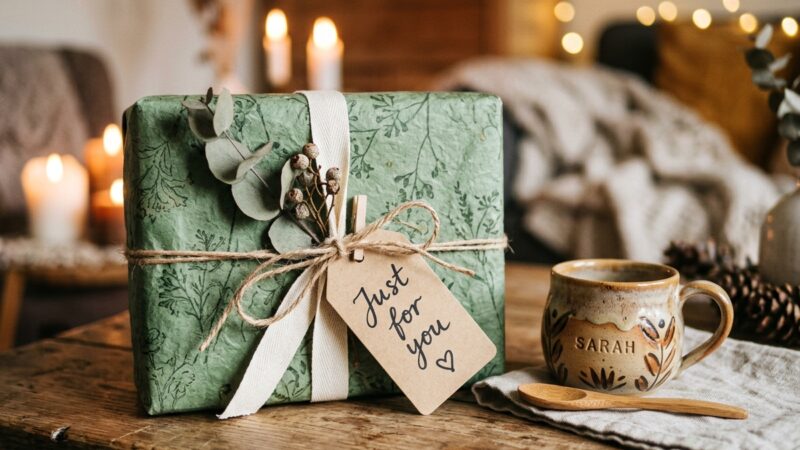
A friend once told me about a birthday gift she received — a plain wooden photo frame with a hand-written note tucked behind the picture. The frame probably cost ₹200. But she’s kept it on her bedside table for eleven years now. Meanwhile, a designer handbag she got the same year? Donated within two years.
That’s the strange power of personalized birthday gifts. They don’t need to be expensive. They don’t need to be fancy. They just need to say, “I thought about YOU while choosing this.”
But why personalized birthday gifts feel special isn’t just some fluffy emotional thing. There’s actual psychology behind it — real science about how our brains process custom gifts differently than generic ones. And once you understand this, you’ll never look at gift-giving the same way again.
This article breaks down the personalized gift psychology, explains the custom birthday gift appeal, and gives you practical ideas you can actually use. Whether you’re shopping for your best friend, your partner, your mom, or your 7-year-old nephew — this will change how you think about presents.
The Psychology Behind Why Personalized Gifts Hit Different
Your Brain Treats Personal Gifts as “Social Proof of Love”
Here’s something most people don’t realize. When you receive a gift that’s been customized — your name engraved on it, a date that matters to you, an inside joke printed on a mug — your brain doesn’t just register it as “a nice object.” It registers it as evidence that someone cares about you.
Psychologists call this concept “perceived thoughtfulness.” A 2017 study published in the Journal of Consumer Research found that recipients consistently rated personalized gifts as more emotionally valuable — not because of the gift’s price, but because of the effort signal it sent.
Think about it. If someone hands you a generic gift card, they spent money. But if someone gives you a custom illustration of your dog wearing a birthday hat? They spent time, thought, and creativity. Your brain notices the difference instantly.
This connects deeply to the psychology behind birthday happiness — that warm feeling on your birthday isn’t just about cake and candles. It’s about feeling seen. Personalized gifts amplify that feeling tenfold.
The “Endowment Effect” Makes Custom Gifts More Valuable
There’s a well-known concept in behavioral economics called the endowment effect. It means people value things more when they feel a sense of ownership over them.
Now here’s the twist with personalized gifts: the endowment effect kicks in before you even fully “own” the gift. The moment you see your name, your photo, or a reference to your personal story on something — your brain immediately assigns it higher value. It’s no longer “a mug.” It’s “MY mug.”
That’s why a ₹500 personalized coffee mug can feel more precious than a ₹5,000 generic perfume set. The custom element triggers a faster, deeper emotional connection.
What Makes a Gift “Personalized” — And What Doesn’t Count
True Personalization vs. Surface-Level Customization
Let’s clear up a common confusion. Slapping someone’s name on a random product isn’t really personalization. That’s just… printing.
True personalization involves at least one of these elements:
- A shared memory — “Remember that trip to Goa? Here’s a photo book of it.”
- A personal preference — “You love Earl Grey, so here’s a curated tea set from Darjeeling.”
- An inside joke or reference — “A custom phone case with that ridiculous photo from college.”
- A meaningful date or number — “A star map of the sky on the night you were born.”
- Their identity or personality — “A journal with prompts designed for introverts” (perfect for someone who prefers birthday celebration ideas for introverts).
Surface-level customization is when you just add a name to a mass-produced item without any real thought. The recipient can tell the difference. Trust me.
The Effort-to-Impact Ratio
Here’s a Pro Tip that most gift-givers miss:
💡 Pro Tip: The emotional impact of a personalized gift is directly tied to how specific it is — not how expensive it is. The more “only they would get this” a gift feels, the more it lands.
A hand-written letter referencing specific moments you’ve shared costs zero rupees. But it can make someone cry happy tears. A ₹10,000 watch with their initials? Nice, but it won’t hit the same unless there’s a story behind it.
5 Reasons Why Personalized Birthday Gifts Feel Special
1. They Communicate “I Know You”
We all want to feel understood. Not just loved — understood. There’s a difference.
When someone gives you a personalized gift that references something specific about your life, it sends a powerful message: “I pay attention to who you are.”
Psychologist Dr. Gary Chapman, who created the concept of the Five Love Languages, identifies “receiving gifts” as one of the core ways people experience love. But here’s what people miss about Chapman’s framework — it’s not the gift itself that matters. It’s the thought behind it. A personalized gift is basically a thought wrapped in paper.
This is one reason why people feel emotional on their birthday — they’re already in a vulnerable, reflective state. A personalized gift during that window hits like a perfectly-timed hug.
2. They Create Stronger Memories
Let me ask you something. Can you remember the last five generic gifts you received? Probably not.
But can you remember a gift that was deeply personal? I bet at least one comes to mind right away.
That’s because personalized gifts get stored differently in your memory. Neuroscience shows that emotionally charged experiences get processed by the amygdala and encoded more deeply into long-term memory. A gift that triggers an emotional reaction — laughter, surprise, tears of joy — literally burns itself into your brain.
The connection between gifts and memory is fascinating, and it echoes what researchers have found about the science behind birthday memories. We don’t remember every birthday — but we almost always remember the ones where someone made us feel truly special.
3. They Strengthen Relationships
Here’s something gift-givers rarely think about: a great personalized gift doesn’t just make the recipient feel good. It strengthens the bond between giver and receiver.
Psychologists call this “reciprocal emotional investment.” When Person A gives Person B a thoughtful, personalized gift, Person B feels valued. That feeling of being valued makes Person B more emotionally invested in the relationship. Person B then wants to reciprocate — not out of obligation, but out of genuine warmth.
It’s a positive feedback loop. And it works in all relationships — romantic, familial, friendships, even professional ones.
4. They Stand Out in the Age of Mass-Produced Everything
We live in a time where you can order literally anything with two taps on your phone. Same-day delivery. Gift wrapping included. Convenient? Absolutely. Meaningful? Debatable.
When everything is easily available, effort becomes the real luxury. A personalized gift stands out because it can’t be one-click ordered. Someone had to think about it, design it, wait for it, maybe even make it by hand.
This is partly why birthday trends in Gen Z are shifting toward experiences and custom gifts over expensive brand-name items. Younger generations value authenticity over price tags. A custom playlist or a personalized video montage means more to them than a boxed perfume set.
5. They Show Vulnerability from the Giver
This one’s underrated. Giving someone a deeply personalized gift is actually an act of vulnerability.
You’re essentially saying, “I noticed this about you. I remembered this moment. This is how I see our relationship.” That takes emotional courage. What if the person doesn’t like it? What if they don’t get the reference? What if the inside joke falls flat?
But that vulnerability is exactly what makes it powerful. The recipient senses the risk the giver took — and they appreciate it, even if they can’t articulate why.
Common Myths About Personalized Gifts — Debunked
Myth 1: “Personalized Gifts Are Always Expensive”
Reality: Some of the most impactful personalized gifts cost almost nothing. A hand-written letter. A curated playlist on Spotify. A framed screenshot of a meaningful text conversation. A jar filled with “52 reasons I love you” notes.
The custom birthday gift appeal has nothing to do with price. It’s about relevance and effort.
Myth 2: “You Need to Be Creative to Personalize a Gift”
Reality: You don’t need to be an artist or a Pinterest wizard. Personalization is about attention, not artistry. If you know your friend is obsessed with a specific TV show, getting them a custom mug with a quote from that show doesn’t require creativity. It requires paying attention.
Myth 3: “Personalized Gifts Are Only for Close Relationships”
Reality: Personalized gifts work beautifully even in professional or casual relationships. A coworker who loves plants? A small pot with their desk photo printed on it. Your neighbor’s kid’s birthday? A storybook with their name as the main character.
The level of personalization changes, but the impact stays consistent.
Myth 4: “Store-Bought Gifts Can’t Be Personalized”
Reality: You can personalize any store-bought gift with a thoughtful card, a specific reason for choosing it, or a small add-on that connects to the person’s life. Personalization isn’t about the product — it’s about the context you wrap around it.
Personalized Gift Ideas That Actually Work (By Relationship)
For Your Partner
- A custom star map of the night you first met
- A book of “Open When…” letters for different moods
- A custom illustration of a place that’s meaningful to both of you
- A timeline of your relationship printed on a poster
For Parents
- A recipe book of family recipes, handwritten
- A “year in review” photo calendar with captions
- A custom family portrait (illustrated or painted)
- A video compilation of family members sharing favorite memories
Choosing the right gift for parents often connects to birthday milestones that matter most, especially for landmark ages like 50th, 60th, or 70th birthdays.
For Friends
- A custom Spotify playlist with songs that define your friendship
- A photo dump frame with the most unflattering (but hilarious) pictures
- A custom phone case with an inside joke
- A “friendship timeline” scrapbook page
For Kids
- A personalized storybook where they’re the hero
- A custom puzzle with their photo
- A name-engraved pencil box or water bottle
- A birthday crown with their name and age
Kids experience birthday excitement differently — their pure joy is unmatched, as explored in why kids get more excited for birthdays than adults.
The Cultural Angle: How Different Cultures View Personal Gifts
Personalized gift psychology isn’t universal — culture plays a role in how gifts are perceived.
In Japan, the wrapping and presentation of a gift matter as much as the gift itself. A beautifully wrapped, simple personalized gift carries enormous weight. In India, personalized gifts often connect to family or religious milestones — gold jewelry with a name engraved, or custom puja items.
In Western cultures, experiential personalization is trending — custom experiences, adventure vouchers, or personalized subscription boxes.
What’s interesting is that across cultures, the core principle remains the same: a gift that reflects knowledge of the recipient always outperforms a generic one. You can see how different cultures celebrate birthdays in unique ways, but the appreciation for thoughtful gifting is truly universal.
The “Gift Gap” — Why Givers and Receivers Think Differently
Here’s a fascinating piece of personalized gift psychology that most people don’t know about.
Research from Carnegie Mellon University found what they call the “gift gap.” Givers tend to overvalue the monetary worth of a gift — thinking more expensive = better. Receivers, on the other hand, value the sentimental and personal meaning behind a gift far more than its price.
This gap explains a lot. It’s why someone spends ₹15,000 on a generic gadget when a ₹1,500 personalized photo book would’ve landed way harder.
Quick Fact: A 2021 survey by the National Retail Federation found that 65% of respondents said they’d prefer a meaningful, personalized gift over a more expensive, generic one.
How to Bridge the Gift Gap
- Stop thinking about what impresses. Start thinking about what connects.
- Ask yourself: “What would make them feel seen?” — not “What would make them feel I spent a lot?”
- Pay attention year-round. The best personalized gifts come from things people mention casually in March and then forget about by December.
💡 Did You Know? People who keep a “gift ideas” note on their phone — jotting down things friends mention wanting throughout the year — are consistently rated as the best gift-givers in their social circles. It’s not talent. It’s a system.
When Personalized Gifts Go Wrong — And How to Avoid It
Let’s be honest. Not every personalized gift is a winner. Sometimes they can feel awkward, cringey, or even inappropriate.
Red Flags to Watch For:
- Too personal, too soon. A custom couple’s portrait on a third date? That’s a horror movie, not a gift.
- Bringing up sensitive memories. A photo gift referencing a time the person was going through something difficult? Bad idea, even with good intentions.
- Inside jokes nobody remembers. If you’re the only one who remembers the joke, it’s not an inside joke anymore — it’s just confusing.
- Over-personalization. A birthday cake shaped like someone’s face. A life-size cardboard cutout. These sound fun in theory but can feel… intense.
The Golden Rule:
Match the level of personalization to the depth of the relationship. The closer you are, the more personal you can go. For acquaintances and colleagues, keep it warm but light.
FAQ Section
Q: Why do personalized birthday gifts feel more valuable than expensive ones?
Personalized birthday gifts feel more valuable because they trigger emotional responses that generic gifts don’t. Your brain interprets a personalized gift as evidence that someone invested time, thought, and attention specifically for you. This perceived thoughtfulness activates the same brain regions associated with social bonding and belonging. The endowment effect also kicks in — seeing your name, your memory, or your personal reference on something instantly makes it feel more “yours.” Studies consistently show that recipients rank sentiment over monetary value when assessing how much a gift means to them.
Q: What’s the best personalized birthday gift for someone who has everything?
For someone who has everything, the best approach is to personalize an experience, not an object. Consider a custom video message from people they love, a curated day planned around their exact interests, or a hand-written letter detailing specific memories you share. You could also create a “time capsule” box with items representing meaningful moments in their life. The key is shifting from “What don’t they own?” to “What would make them feel emotionally rich?”
Q: Does the psychology of personalized gifts apply to all age groups?
Yes, but it manifests differently. Children respond to personalization through excitement and identity — seeing their name on a storybook makes them feel like a hero. Teenagers and young adults value gifts that reflect their individuality and social identity — custom items that represent their interests, fandoms, or style. Adults over 40 tend to value nostalgia-driven personalization — gifts that reference shared history, family milestones, or personal achievements. Seniors often find the deepest meaning in gifts that compile memories — photo books, recorded family messages, or heritage-related keepsakes. The underlying personalized gift psychology stays the same across ages: feeling recognized and valued.
Q: Are DIY personalized gifts better than professionally made custom gifts?
Neither is inherently “better” — it depends on the relationship and the execution. DIY gifts carry a raw emotional charge because the recipient knows you physically made it. A hand-knitted scarf or a hand-painted portrait communicates effort in a way nothing else can. Professionally made custom gifts — like engraved jewelry, custom-printed books, or personalized artwork from services like Etsy — carry a polished quality that feels premium. The best strategy? Combine both. Get a professionally made custom item, but pair it with a handwritten note explaining why you chose it. That combination is almost unbeatable.
Your Next Birthday Gift Can Be the One They Never Forget
So here’s what it really comes down to. You don’t need a bigger budget to give a better gift. You need better attention.
Every conversation you have with someone is full of gift clues — the book they mentioned wanting to read, the song that made them nostalgic, the restaurant they keep saying they want to try, the childhood memory that makes them laugh every time.
Personalized birthday gifts feel special because they’re proof that you listened. They’re tangible evidence of a relationship. And in a world where everyone’s busy and distracted, giving someone your attention — and turning that attention into a gift — is one of the kindest things you can do.
Next time a birthday’s coming up, put your phone down for ten minutes. Think about that person. What makes them laugh? What do they care about? What’s a moment you shared that meant something?
Start there. The gift will follow.
And if you want to understand more about why birthdays matter in psychology — why this one day holds so much emotional weight for us — you’ll realize that a thoughtful gift isn’t just a nice gesture. It’s a way of telling someone, “You matter to me. Today and every day.”
That’s a message worth wrapping up.
Related Articles

Twins’ Birthday Wishes: Double the Fun & Greetings
Celebrating two people at once is a special kind of joy. Whether you’re writing in a...

Thank You Messages: 100+ Replies for Birthday Wishes
Someone took a moment out of their day to think of you, type out a message,...
Best Friend Birthday Wishes: Top Heartfelt Messages
A good friend’s birthday deserves more than a rushed text or a recycled message you’ve sent...