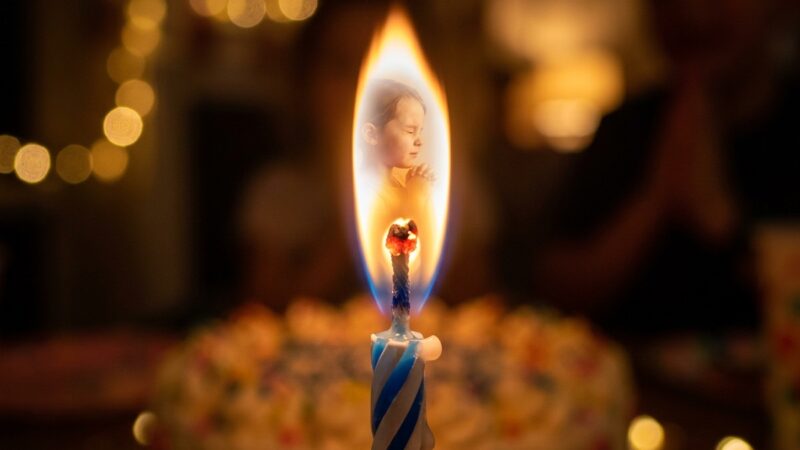
A single candle flickering on a frosted cake. A roomful of people singing off-key. A deep breath. A wish nobody says out loud. You’ve done this ritual dozens of times — probably since before you could even form memories. But here’s something wild: this simple act of lighting candles on a birthday cake traces back over 2,000 years, rooted in ancient Greek moon worship and fire rituals.
Ever stopped to think about why we put candles on birthday cake in the first place? Why not flowers? Why not stones? Why fire — on top of food — surrounded by children?
The meaning behind birthday candles is way deeper than most people realize. It touches on spirituality, superstition, protection rituals, and even a bit of science. And no, it didn’t start as a cute party trend.
Let’s break down the full story — where it came from, what the flames actually symbolize, and why we still cling to this tradition in 2025 like it’s the most natural thing in the world. If you’re curious about the origin of birthday cakes and candles, this article connects a lot of those dots with fresh context.
The Ancient Roots of Birthday Candles
Greek Moon Goddess and Round Cakes
The earliest known connection between candles and cakes goes back to ancient Greece — specifically to the worship of Artemis, the goddess of the moon and the hunt.
Greeks would bake round cakes (called “amphiphon”) to represent the full moon. They’d place lit candles on top to make the cakes glow like the moon itself. The smoke rising from those candles? That was believed to carry prayers up to Artemis in the sky.
So the original birthday candle symbolism wasn’t about wishes or age or fun. It was a religious offering. A glowing cake was literally a tribute to a deity.
🔍 Quick Fact: The round shape of birthday cakes today still echoes that ancient moon-cake tradition from Greek temples — over 2,500 years ago.
Roman Birthday Celebrations
Romans had their own spin. They celebrated birthdays — but mainly for important men, not women or children. Candles and fire were part of Roman celebrations too, but more as symbols of warmth, life force, and the human spirit.
Romans also believed that each person had a “genius” — a protective spirit born with them. Birthday celebrations honored this spirit, and fire (through candles or torches) was a way to keep evil forces away on someone’s special day.
German Kinderfest — The Modern Template
The tradition we recognize today — candles on a cake, one for each year — most likely comes from 18th-century Germany. A celebration called Kinderfest (children’s festival) featured a cake with candles matching the child’s age, plus one extra candle called the “light of life” or Lebenslicht.
These candles burned all day long. The child didn’t blow them out until evening, after dinner. The belief was that the continuous flame protected the child from evil spirits throughout the birthday.
By the 1800s, German immigrants brought this tradition to America, and it slowly became the standard birthday party ritual we all know. If you’re fascinated by how birthday parties changed over time, you’ll see how this German custom evolved into the massive celebration industry we have today.
Why We Put Candles on Birthday Cake — The Real Reasons
People assume birthday candles are just decorative. They’re not. The tradition carries layers of meaning that have stacked up over centuries.
1. Fire as a Symbol of Life
Across almost every ancient culture — Greek, Roman, Hindu, Celtic — fire represents life itself. A burning flame mirrors the spark of being alive. Placing a candle on a birthday cake is, symbolically, placing a representation of your life force at the center of a celebration about you.
Each year you add another candle. Each flame says: you made it another year. You’re still here. Still burning.
2. Smoke Carries Prayers and Wishes
This connects directly to the Artemis tradition. Smoke rising upward was seen as a bridge between humans and the divine. When you blow out candles and make a wish, you’re unconsciously participating in an ancient ritual where smoke carried human desires to the gods.
That’s why the wish has to be silent. Speaking it aloud, according to old superstition, breaks the connection. The smoke “hears” your thought and takes it up.
3. Protection Against Evil Spirits
The Germans weren’t the only ones who believed birthdays made people vulnerable. Many ancient cultures thought that on your birthday, the boundary between you and the spirit world was thinner. Evil spirits or bad luck could slip through.
Fire has always been a universal ward against darkness and evil. Candles on a cake weren’t just festive — they were protective barriers for the birthday person. The more candles (as you aged), the more protection you needed.
You’d be surprised how many weird birthday superstitions people still believe today — including ones directly tied to candles.
4. Counting the Years
The most practical reason — and probably the most recent one historically — is simply tracking age. One candle per year became a visual way to celebrate growth, especially for children.
For kids, counting candles is exciting. It’s concrete. “Look, I have SIX candles! I’m a big kid!” It gives them a tangible marker of growing up.
5. A Moment of Focus and Intention
Here’s something people rarely talk about. The candle-blowing moment is actually the only point during a birthday party where everyone stops, gets quiet, and focuses entirely on one person. The singing ends. The room goes still. The birthday person closes their eyes, thinks deeply, and makes a wish.
That’s a powerful psychological moment. It’s basically a mini meditation — a setting of intention. And the candles create that focal point.
Birthday Candle Symbolism Across Different Cultures
The birthday candle symbolism isn’t universal, and it doesn’t look the same everywhere. Different cultures bring their own spin.
Western Traditions
In most of Europe and the Americas, candles represent age, wishes, and celebration. The standard ritual: light the candles, sing “Happy Birthday,” make a silent wish, blow them all out in one breath. If you get them all in one try, your wish comes true. If not — well, better luck next year.
Some families add an extra candle for “good luck” or for “one to grow on.” This mirrors the old German Lebenslicht tradition, though most people doing it today don’t know the backstory.
Chinese Birthday Traditions
Traditional Chinese birthday celebrations don’t typically use candles on cakes. Birthdays are often marked with longevity noodles (长寿面) — long, uncut noodles symbolizing a long life. The cake-and-candle tradition has been adopted in modern China, especially in urban areas, but it’s a Western import.
Interestingly, many Chinese families now combine both — longevity noodles AND a candle-topped cake. It’s a beautiful cultural blend.
Indian Birthday Customs
In India, traditional birthday observances vary hugely by region and religion. Candle-lit cakes are popular in modern Indian celebrations, particularly in cities. But many families also include temple visits, feeding the poor, and touching elders’ feet for blessings.
The fire symbolism is especially interesting here because fire (Agni) is sacred in Hindu tradition. So candles on a cake carry an extra layer of spiritual meaning for many Indian families, even if they don’t consciously think about it.
Mexican Celebrations
In Mexican birthday parties, especially for children, the mordida tradition (where the birthday person’s face gets pushed into the cake) is way more central than the candle-blowing. But candles are still used, and the wish-making tradition holds strong.
For a deeper look at birthday traditions around the world, there’s a whole world of rituals beyond candles that’ll surprise you.
The Science and Psychology Behind Blowing Out Candles
Why Wishes Feel Real
You might think making a wish on birthday candles is just a silly tradition. But psychologically, it’s doing something real to your brain.
Studies in psychology have shown that rituals enhance the perceived meaning of experiences. When you close your eyes, focus on a desire, and then perform a physical action (blowing out flames), your brain registers this as a meaningful commitment. It’s similar to how writing down goals makes you more likely to achieve them.
The ritual doesn’t grant wishes. But it does create a moment of genuine intention-setting, which your subconscious mind takes seriously.
💡 Pro Tip: If you want your birthday wish to actually work, psychologists suggest treating it like a real goal — not a fantasy. Wish for something you can actually work toward, not a magic lottery win.
The Hygiene Question Nobody Wants to Ask
Okay, let’s address the elephant in the room. Blowing out birthday candles sprays tiny droplets of saliva all over the cake. A 2017 study from Clemson University found that blowing out candles increased the bacteria on cake frosting by 1,400%.
Yep. You read that right. Fourteen hundred percent.
Since the COVID-19 pandemic, more people have become aware of this. Some families now use:
- Individual cupcakes with one candle each
- Fan-blown candles (a small hand fan to extinguish)
- Trick candles that relight (which, ironically, reduces blowing)
- Candle covers — clear shields placed over candles
The tradition isn’t dying, but it IS adapting. And honestly? That’s what traditions do — they evolve or they disappear.
Why Kids Care More About Birthday Candles Than Adults
There’s a reason a five-year-old practically vibrates with excitement during the candle moment, while a 42-year-old just wants to get it over with. A child’s relationship with birthdays is pure anticipation. Each year genuinely feels like a new level achieved.
For adults, birthdays often come with complicated feelings — aging anxiety, unmet expectations, comparison with peers. The candle moment can trigger why people feel emotional on their birthday rather than excited. Interesting how the same ritual carries such different emotional weight at different ages, right?
Common Myths and Misconceptions About Birthday Candles
Myth 1: “The Tradition Started in America”
Nope. As we covered, it’s rooted in ancient Greece and was shaped significantly in 18th-century Germany. America adopted and popularized it, but didn’t invent it.
Myth 2: “You MUST Blow Them All Out in One Breath for Your Wish to Come True”
This “rule” has no single origin. It likely comes from the idea that a clean, complete action shows conviction and focus. But different cultures have different takes. In some European traditions, it’s actually the smoke that matters — not whether you blew them all out at once.
So don’t stress if you need two breaths. Your wish isn’t ruined.
Myth 3: “Birthday Candles Have Always Been One Per Year”
The one-candle-per-year system is relatively modern. The ancient Greeks used candles for religious tribute, not counting. Even in the German Kinderfest tradition, there was often one large central candle (the Lebenslicht) plus a few smaller ones — not necessarily one per year.
The strict age-counting approach became standard mainly in the 20th century, when birthday cakes and candles became commercially marketed in places like America and Britain.
Myth 4: “Trick Candles Are a Modern Invention”
Trick candles — the ones that relight after you blow them out — actually use magnesium in their wicks. When you blow out the flame, the ember stays hot enough to reignite the magnesium particles, which relight the candle. They’ve been around since at least the 1980s, but the chemistry behind self-relighting wicks goes back further than most people assume.
Myth 5: “Every Culture Uses Birthday Candles”
Many cultures don’t use candles at all. Some don’t even celebrate birthdays in the traditional Western sense. Jehovah’s Witnesses, for example, don’t celebrate birthdays. Some Buddhist traditions focus on the birth date of the Buddha rather than individual birthdays. The candle-on-cake tradition is widespread, but it’s far from universal.
For a broader picture, check out how different religions view birthdays — it might shift your perspective entirely.
Modern Birthday Candle Trends (2024–2025)
Number Candles and Sparkler Candles
Instead of cramming 35 individual candles onto a cake (hello, fire hazard), many people now use number-shaped candles — a “3” and a “5” instead of thirty-five tiny sticks. It’s cleaner, easier, and photographs way better for social media.
Sparkler candles — the ones that shoot small sparks like mini-fireworks — have exploded in popularity, especially for milestone birthdays and Instagram-worthy celebrations.
LED and Flameless Candles
For safety-conscious parents, allergies (some kids react to candle smoke), or indoor venues with fire restrictions, LED birthday candles have become a real thing. You can still “blow” them out — they use a breath-sensor chip to detect airflow and switch off.
Purists might scoff, but the ritual remains intact. Your brain still gets that satisfying moment of intention and release.
Personalized and Themed Candles
Etsy and custom candle makers now offer candles shaped like animals, letters, unicorns, sports equipment, and even tiny versions of people’s faces. Birthday candles have become a personalized expression rather than just a generic add-on.
The meaning stays the same — fire, wishes, celebration — but the packaging keeps evolving.
The Social Media Effect
Here’s a truth about modern birthdays: the candle moment is now the most photographed and shared moment of any birthday party. The soft glow of candlelight on a person’s face? That’s universally flattering. That’s the shot everyone wants.
This has actually reinforced the tradition rather than weakened it. Even people who don’t care about wishes or symbolism still want their candle moment — because it looks great on Instagram. The ways social media changed birthday culture run deeper than most of us realize.
What Your Number of Candles Might Symbolize
While this is more folk tradition than hard fact, many cultures assign special meaning to certain candle counts:
Birthday Candles and Spiritual Meaning
Beyond history and psychology, many people today attach genuinely spiritual significance to birthday candles. This isn’t just nostalgia — it’s active belief.
Candles as Connection to Passed Loved Ones
Some families light an extra candle on the birthday cake for a family member who has passed away. The flame represents their continued presence and the belief that they’re still watching, still part of the celebration.
Manifestation and Law of Attraction
In the manifestation community (which has grown massively thanks to TikTok and social media), the birthday candle moment is treated as one of the most powerful manifestation opportunities of the year. The idea is that your “birthday energy” — aligned with your personal cosmic cycle — amplifies your intention.
Whether you believe in this or not, the framework is consistent with the ancient origins: fire + intention + breath = a message sent to the universe.
Numerology and Candle Colors
Some people choose candle colors based on numerology or color symbolism:
- White candles: Purity, new beginnings
- Gold candles: Success, abundance
- Pink candles: Love, friendship
- Blue candles: Peace, healing
- Red candles: Passion, energy
This is a personal practice, not a universal tradition. But it shows how the meaning behind birthday candles keeps expanding and personalizing.
FAQ Section
Why do we make a wish before blowing out birthday candles?
The wish tradition connects to ancient Greek beliefs that smoke from candle flames carried human prayers and desires up to the gods — specifically to Artemis, the goddess of the moon. Over centuries, this transformed from a religious ritual into a personal, secular tradition. The “rule” about keeping your wish secret likely comes from the belief that speaking it aloud would break the spiritual connection between your intention and the divine.
Is it bad luck if you can’t blow out all birthday candles in one breath?
Not really — this is a folk superstition with no single origin. The idea is that blowing out all candles in one breath shows strong conviction, which gives your wish more power. But there’s no historical consensus on this. In many European traditions, the important thing was the smoke itself, not whether the flames went out simultaneously. So take two breaths if you need to. Your wish is safe.
How many candles should you put on a birthday cake?
Traditionally, you place one candle for each year of the person’s age. Some families add one extra candle for “good luck” or “one to grow on” — a practice rooted in the German Lebenslicht (light of life) tradition from the 1700s. For older adults, number-shaped candles are a practical and popular alternative. There’s no strict rule — the meaning behind birthday candles stays the same whether you use 5 candles or 50.
When did birthday candles become a common tradition?
While the roots trace back to ancient Greece (around 500 BCE), the modern tradition of placing candles on birthday cakes became common in 18th-century Germany through Kinderfest celebrations. The practice spread to America and Britain in the 1800s and became mainstream globally during the 20th century, helped significantly by commercial cake and candle industries.
Are birthday candles safe for kids?
Standard birthday candles are generally safe when supervised by adults. The bigger concerns are melting wax dripping onto frosting (and being eaten), candle smoke for kids with asthma or respiratory sensitivities, and the obvious fire risk with excited children nearby. LED flameless candles and individual cupcake candles are popular safer alternatives.
Those Little Flames Mean More Than You Think
Next time you stand in front of a birthday cake, candles glowing, room going quiet — pause for a second before you blow. You’re not just performing a cute party trick.
You’re standing in a chain of human ritual that stretches back thousands of years. From Greek temples honoring Artemis, to German families guarding their children with Lebenslicht, to your dining room table right now — the meaning behind birthday candles has always been about the same core things: life, hope, protection, and the quiet human need to believe our wishes matter.
That’s not a small thing. That’s a fire worth keeping alive.
And hey — if you’re someone who’s been skipping the candle moment because it feels childish, maybe reconsider. Give yourself that 10-second ritual. Close your eyes. Think about what you really want from the next year. Blow.
You’ve earned that breath.
For more on why birthdays matter in psychology and how these rituals shape our emotional lives, keep exploring — there’s always more to the story than meets the eye. 🎂
Related Articles

Twins’ Birthday Wishes: Double the Fun & Greetings
Celebrating two people at once is a special kind of joy. Whether you’re writing in a...

Thank You Messages: 100+ Replies for Birthday Wishes
Someone took a moment out of their day to think of you, type out a message,...

Best Friend Birthday Wishes: Top Heartfelt Messages
A good friend’s birthday deserves more than a rushed text or a recycled message you’ve sent...