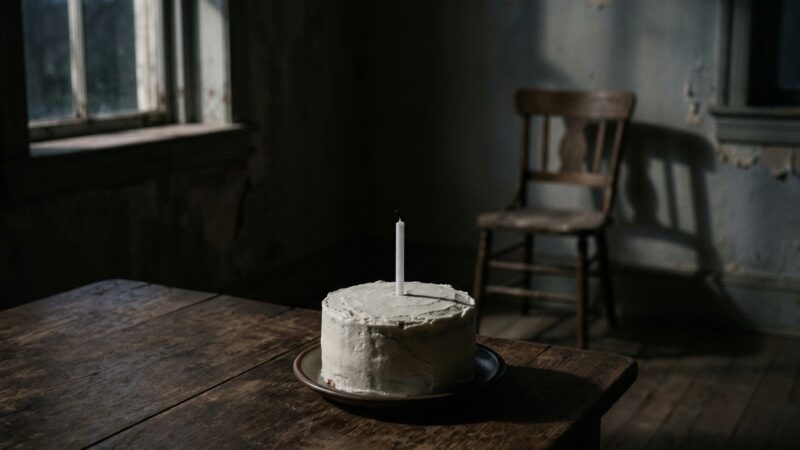
A 2023 survey by the American Psychological Association found that nearly 40% of adults feel some level of stress, sadness, or outright dread as their birthday approaches. That’s not a small number. Almost half the population isn’t popping confetti — they’re quietly hoping the day passes unnoticed.
And yet, society keeps telling us birthdays should be the happiest day of the year. Cake, candles, parties, Instagram posts — the whole deal. So when someone says, “I don’t want to celebrate,” people look at them like something’s broken.
Nothing’s broken. There are real, valid, deeply personal reasons why people hate birthdays. Some are rooted in psychology. Some come from painful memories. Some are simply about personality.
If you’ve ever felt a knot in your stomach when your birthday month rolls around, this article is for you. Let’s talk about what’s actually going on — no judgment, just honesty.
The Psychology Behind Birthday Anxiety
Birthday anxiety isn’t a made-up phrase. Psychologists have a term for it — it’s often linked to what researchers call the “birthday blues.” Dr. Ellen Langer, a psychology professor at Harvard, has studied how temporal landmarks like birthdays trigger intense self-evaluation.
Here’s what happens in your brain: your birthday acts like a mental checkpoint. You automatically start comparing where you are versus where you thought you’d be. Career milestones, relationships, finances, health — everything gets put under a mental microscope.
That comparison almost never ends well.
You’re not celebrating a birthday. You’re conducting a life audit. And for many people, that audit brings up feelings of inadequacy, regret, or anxiety.
Quick Fact: A study published in the journal Social Science & Medicine found that mortality rates actually spike slightly on and around birthdays — a phenomenon researchers attribute to emotional stress, not coincidence.
If you want to understand this emotional side more deeply, the article on why birthdays matter in psychology breaks this down really well.
9 Real Reasons Why People Hate Birthdays
1. The Fear of Aging (And It’s Not Just Vanity)
Let’s be honest. Every birthday is a reminder that time is moving and you can’t stop it. For some people, that thought is terrifying — not because of wrinkles or grey hair, but because of mortality itself.
This hits harder after certain ages. Turning 30 feels like a deadline. Turning 40 feels like a warning. Turning 50? Some people spiral into full-blown existential crisis.
The fear isn’t shallow. It’s deeply human. You’re confronting the fact that life is finite, and your birthday is the annual reminder you didn’t ask for.
Interestingly, the science of aging and birthdays shows that this fear gets worse in cultures that glorify youth. Western societies especially struggle with this because aging is treated as a decline, not a journey.
2. Unrealistic Expectations That Always Disappoint
Here’s a pattern many birthday-haters know too well:
- You imagine the “perfect” birthday
- You expect people to “just know” what you want
- Nobody reads your mind (because they can’t)
- You end up disappointed, hurt, or angry
This expectation gap is a huge reason why people hate birthdays. Social media makes it worse. You see someone else’s perfectly planned surprise party, aesthetic birthday photoshoot, or a table overflowing with gifts — and your day feels small by comparison.
The truth? Most of those posts are curated. Half those “surprise” reactions are rehearsed. But your brain doesn’t process that in the moment. It just feels the gap between expectation and reality.
3. Painful Memories Attached to the Date
Not everyone has happy birthday memories. For some people, their birthday is linked to:
- The loss of a loved one
- A traumatic event that happened on or near that day
- A childhood where birthdays were ignored or ruined
- A breakup, divorce, or betrayal tied to the date
When your birthday carries grief, celebrating feels wrong. Even forced. You’re not being dramatic — your brain has wired that date to pain, and no amount of cake fixes that.
Pro Tip: If your birthday triggers painful memories, therapists recommend creating a new ritual for the day. It doesn’t have to be a party. Even a quiet walk, a favorite meal, or a day off can slowly rewrite the emotional association.
4. Social Pressure and the Performance of Happiness
This is one of the most overlooked reasons to not celebrate birthday events — the performance aspect. On your birthday, you’re expected to:
- Smile for photos
- Act grateful for every gift (even ones you don’t want)
- Respond to every message, call, and post
- Be the center of attention for hours
- Pretend you’re having the “best day ever”
For introverts, people with social anxiety, or anyone going through a tough time, this is exhausting. You’re essentially performing happiness for an audience.
The article on introverts vs extroverts on birthdays explores this perfectly. Introverts don’t hate joy — they hate being put on a stage they never auditioned for.
5. Nobody Showed Up (Literally or Emotionally)
Few things sting like a birthday that nobody remembers. Or worse — a party where half the people don’t show up.
This fear of being forgotten or unimportant is a big driver of birthday hatred. Some people preemptively avoid celebrating because they’d rather skip the day entirely than risk finding out they don’t matter to the people around them.
It’s a protective mechanism. You can’t be disappointed if you never set up the situation to be disappointed in.
Did You Know? Psychologist Abraham Maslow placed “belonging” in the middle of his famous hierarchy of needs. A forgotten birthday doesn’t just hurt your feelings — it threatens your fundamental sense of belonging.
6. Financial Stress That Nobody Talks About
Birthdays cost money. Sometimes a lot of it. And that stress falls on the birthday person more often than you’d think.
- You feel pressure to throw a party
- Friends expect to “go out” (and someone has to foot the bill)
- Gift reciprocity — if someone gave you something expensive, now you feel obligated
- Even a “simple” dinner with friends at a restaurant adds up fast
For people living paycheck to paycheck, or anyone going through financial difficulties, the birthday becomes a financial burden wrapped in wrapping paper. And saying “I can’t afford to celebrate” still carries a stigma that makes people uncomfortable.
7. The Milestone Panic
Certain birthdays carry extra weight. Turning 18, 21, 25, 30, 40, 50 — society has attached meaning to these numbers. And if you haven’t hit the “expected” milestones by those ages, your birthday becomes a shame trigger.
“You’re 30 and still not married?”
“You’re 40 and still figuring out your career?”
“You’re 25 and still living at home?”
These aren’t just annoying questions. They’re tiny daggers. And your birthday is when people feel most entitled to throw them at you.
The piece on birthday milestones that matter most talks about how these age markers became so loaded — and why most of them are arbitrary.
8. Grief for a Version of Yourself That Doesn’t Exist
This one’s subtle but powerful. Some people don’t hate birthdays — they grieve on them. They mourn the person they thought they’d be by now.
At 16, you imagined your life at 30. You had dreams, plans, a whole movie playing in your head. Now you’re 30 and the movie looks nothing like what you imagined. The gap between your imagined self and your real self can feel devastating on the one day that literally marks the passage of time.
This is closely connected to why people reflect on life during birthdays. Reflection is natural. But when it only highlights what’s missing, it turns into mourning instead of celebration.
9. Cultural or Religious Reasons
Not everyone’s background encourages birthday celebrations. Some religions — like certain branches of Jehovah’s Witnesses and some Islamic traditions — view birthday celebrations as unnecessary or even inappropriate.
People from these backgrounds might not “hate” birthdays emotionally. They simply don’t see a reason to celebrate, and that’s a perfectly valid position. The article on how different religions view birthdays covers this in detail.
Respecting these perspectives matters. Not everyone who skips their birthday is sad. Some are just following a different value system.
Why Birthday Hatred Gets Worse With Age
Here’s something nobody warns you about: the older you get, the harder birthdays can feel. And there’s real science behind this.
Time perception changes. A year for a 10-year-old is 10% of their entire life. A year for a 50-year-old is just 2%. That’s why birthdays feel like they come faster and faster. The piece on why birthdays feel faster as you age explains this phenomenon beautifully.
Social circles shrink, too. At 10, your whole class shows up. At 25, you’ve got a solid friend group. At 45? You’re lucky if three people are free on a Saturday night. The shrinking guest list isn’t a reflection of your worth — it’s just life. But it feels personal.
There’s also the energy factor. Planning a party at 22 is fun. Planning one at 42, while managing kids, work, aging parents, and a mortgage? It’s just another item on an already overwhelming to-do list.
This is exactly why some adults stop celebrating birthdays entirely — and it doesn’t mean they’re unhappy. They’ve just redefined what the day means to them.
The Social Media Problem
We need to talk about this because it’s making birthday anxiety significantly worse.
Instagram, TikTok, and Facebook have turned birthdays into public performances. The pressure to post, to be posted about, and to have a “story-worthy” birthday is enormous — especially for people under 35.
Consider these silent anxieties:
- “How many people will post for me?” (and what it means if they don’t)
- “My story didn’t get as many replies as hers did”
- “Everyone else had a party — I just had dinner at home”
- “I looked terrible in the photos”
These aren’t silly worries. They’re real emotional experiences tied to self-worth. The article on how social media changed birthday culture shows just how dramatically online platforms have shifted what we expect from the day.
Pro Tip: Some therapists now recommend a “digital detox birthday” — turning off your phone, avoiding social media, and spending the day on your terms. People who’ve tried it report feeling dramatically more peaceful about their birthday.
Common Myths About People Who Hate Birthdays
Let’s clear up some misconceptions.
Myth 1: “They’re just attention-seeking in reverse.”
No. Saying “I don’t want to celebrate” isn’t a secret code for “please throw me a surprise party.” When someone tells you they don’t want a fuss, believe them.
Myth 2: “They must be depressed.”
Not necessarily. Birthday discomfort exists on a spectrum. Some people have clinical depression that worsens around their birthday (this is real and worth professional attention). But many birthday-haters are perfectly fine emotionally — they just don’t enjoy the forced celebration.
Myth 3: “They had a bad childhood.”
Sometimes, yes. Often, no. Plenty of people with happy childhoods grow to dislike birthdays as adults. The reasons evolve with age and experience.
Myth 4: “They’re ungrateful.”
This one hurts the most. Choosing not to celebrate doesn’t mean you’re ungrateful for life. You can be deeply thankful for your existence without wanting a party, cake, or 47 WhatsApp messages that all say the same thing.
How to Handle Your Birthday When You Hate It
If birthday anxiety is something you deal with every year, here are some strategies that actually work:
Set Boundaries Early
Tell people ahead of time what you want and don’t want. “Hey, I’d prefer no party this year” is a complete sentence. You don’t owe anyone an explanation.
Create Your Own Ritual
Take back the day on your terms. Some ideas:
- A solo trip or staycation
- A “no phones” day
- Treating yourself to something you’ve been wanting
- Volunteering (shifting focus outward can reduce self-focused anxiety)
- Writing a letter to your future self
If you need more ideas, birthday celebration ideas for introverts has some great ones that don’t involve a single party hat.
Manage Expectations (Your Own)
The biggest birthday letdowns come from unspoken expectations. If you want something specific — say it. If you want nothing — say that too. The gap between what you expect and what happens is where disappointment lives.
Talk About It
If your birthday dread is connected to deeper issues — grief, trauma, depression, loneliness — talking to a therapist can genuinely help. There’s no “silly” reason to seek help. If it affects your mental health once a year like clockwork, that’s worth addressing.
⚠️ Warning: If you experience severe depression, suicidal thoughts, or intense emotional distress around your birthday, please reach out to a mental health professional. The 988 Suicide and Crisis Lifeline (call or text 988 in the US) is available 24/7.
What If Someone You Love Hates Their Birthday?
This section is for the other side — the friends and family who don’t understand why their loved one dreads the day.
Don’t force a celebration. This is the number one rule. If someone says they don’t want a party, throwing a surprise party isn’t sweet — it’s a boundary violation.
Don’t take it personally. Their dislike of birthdays isn’t about you. It isn’t a rejection of your love or effort.
Ask what they do want. Maybe they’d love a quiet dinner with just you. Maybe they want a handwritten card instead of a public Facebook post. Maybe they genuinely want the day to pass like any other Tuesday. All of these are okay.
Acknowledge the day simply. A short, genuine message — “Thinking of you today. No pressure for anything.” — can mean more than an elaborate gesture to someone with birthday anxiety.
FAQ Section
Is it normal to hate your birthday?
Absolutely. Research and surveys consistently show that a significant portion of adults — some estimates say 30-40% — experience some form of negative emotion around their birthday. It’s far more common than people think. You’re not “broken” or “ungrateful.” You’re human, and your feelings about a socially loaded day are completely valid.
What is birthday anxiety called?
While there isn’t one single clinical term, mental health professionals commonly refer to it as “birthday blues” or “birthday depression.” Some psychologists also use the phrase “birthday stress syndrome” informally. The phenomenon is well-documented and closely related to temporal landmarks that trigger self-evaluation and existential awareness.
How do I stop dreading my birthday?
Start by identifying why you dread it. Is it aging? Social pressure? Painful memories? Unmet expectations? Once you pinpoint the cause, you can take targeted action. Setting boundaries, creating your own low-key rituals, avoiding social media for the day, and talking to someone you trust can all make a real difference. If the dread feels overwhelming, a therapist can help you work through the underlying causes.
Can birthday hatred be a sign of depression?
It can be, but it isn’t always. Seasonal dread around your birthday doesn’t automatically mean clinical depression. That said, if your birthday consistently triggers prolonged sadness, withdrawal, hopelessness, or thoughts of self-harm, those are signs worth discussing with a mental health professional. The birthday might be a trigger for something deeper that deserves attention and care.
Is it okay to not celebrate your birthday at all?
100% yes. There’s no rule — social, cultural, or psychological — that says you must celebrate. Many people around the world skip birthday celebrations for personal, religious, or cultural reasons, and they live perfectly happy, fulfilling lives. Your birthday is your day. Spending it however feels right to you is the only “correct” way to handle it.
Your Birthday, Your Rules
Here’s the thing nobody tells you growing up: you don’t owe anyone a celebration. Not your parents, not your friends, not your Instagram followers. Your birthday is the one day that’s literally about you — and that means you get to decide what it looks like.
Maybe it looks like a quiet morning with coffee and a book. Maybe it’s a long drive with your favorite playlist. Maybe it’s pretending the day doesn’t exist at all. And maybe, some year down the road, you’ll feel like celebrating again — on your own terms, for your own reasons.
If you’re someone who loves birthdays, that’s beautiful too. Understanding why people love their birthdays so much can help you appreciate that joy while also respecting those who experience the day differently.
The only wrong way to handle your birthday is to spend it performing happiness you don’t feel, for an audience that isn’t paying attention.
Be honest with yourself. Set your boundaries. And know that whatever you feel on that day — joy, dread, grief, indifference, or all of the above — it’s valid.
It’s your day. Nobody else gets a vote.
Related Articles

Twins’ Birthday Wishes: Double the Fun & Greetings
Celebrating two people at once is a special kind of joy. Whether you’re writing in a...

Thank You Messages: 100+ Replies for Birthday Wishes
Someone took a moment out of their day to think of you, type out a message,...

Best Friend Birthday Wishes: Top Heartfelt Messages
A good friend’s birthday deserves more than a rushed text or a recycled message you’ve sent...