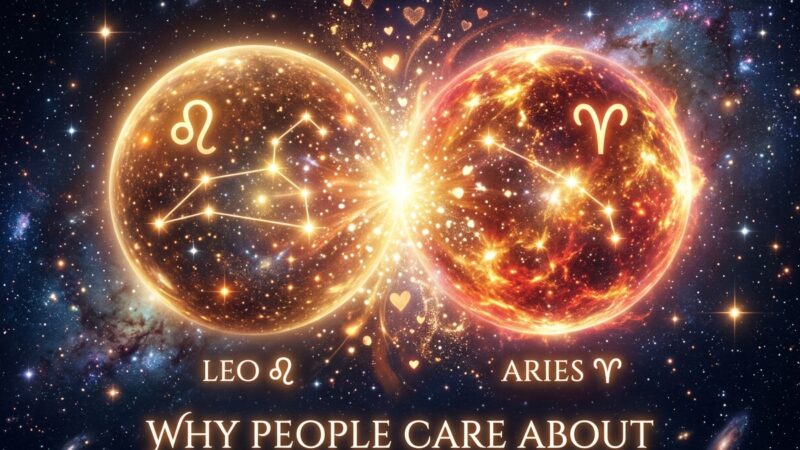
About 75% of millennials and Gen Z say they check zodiac compatibility before getting serious with someone. That’s not a small number. That’s three out of four young people quietly pulling up their phone after a first date to see if their signs “match.”
So why do people care about zodiac compatibility this much? Is it just a fun trend? Or is something deeper going on inside our minds that makes us crave these cosmic answers?
Here’s the thing — whether you fully believe in astrology or laugh at it over coffee, you’ve probably asked someone their sign at least once. And you probably had a reaction. “Oh, you’re a Scorpio? That explains a lot.” We’ve all been there.
The truth is, zodiac sign compatibility reasons go way beyond horoscopes in newspapers. They tap into real psychological needs — our desire for certainty, our fear of heartbreak, and our desperate need to understand the people we love. The fascination with why zodiac signs became so popular isn’t random. It’s rooted in how our brains actually work.
Let’s break down exactly why this cosmic matchmaking has such a strong grip on us.
The Psychology Behind Why People Care About Zodiac Compatibility
We Hate Uncertainty — Especially in Love
Your brain is wired to avoid uncertainty. Psychologists call this the “need for cognitive closure.” You want clear answers, neat categories, and predictable outcomes. Relationships are the exact opposite. They’re messy, confusing, and unpredictable.
Zodiac compatibility offers something your anxious brain craves — a framework. It tells you: “A Taurus and a Cancer? Great match. A Leo and a Virgo? Tricky territory.” Suddenly, the most confusing part of your life feels manageable.
Dr. Bertram Malle, a cognitive scientist at Brown University, has noted that humans constantly seek causal explanations for behavior. When your partner does something that confuses you, “Oh, that’s such a Gemini thing” feels oddly satisfying. It gives you a reason. It calms the chaos.
Quick Fact: A 2023 YouGov survey found that 27% of Americans believe astrology is “very” or “somewhat” scientific. Among adults under 30, that number jumps significantly higher.
The Barnum Effect Is Doing Heavy Lifting
Ever read a zodiac compatibility description and thought, “Wow, this is SO us”? There’s a name for that — the Barnum Effect (also called the Forer Effect).
In 1948, psychologist Bertram Forer gave his students a “personalized” personality assessment. Every student got the exact same vague paragraph. And they rated its accuracy at 4.26 out of 5.
Zodiac compatibility works the same way. Descriptions are written to be broadly relatable. “You two will face communication challenges but share deep emotional bonds.” Name one couple that sentence DOESN’T apply to.
This doesn’t mean compatibility readings are useless. It means your brain actively wants them to be true. And that wanting — that psychological buy-in — is exactly why people care about zodiac compatibility so deeply.
Pattern Recognition Gone Cosmic
Your brain is a pattern-finding machine. It evolved to spot connections — which berries are safe, which animals are dangerous, which clouds mean rain. This same machinery fires up when you think about astrology.
You date two Aries people and both are “stubborn.” Your brain immediately connects the dots: Aries = stubborn. Never mind that millions of Aries people are incredibly flexible. Your brain already locked in the pattern.
Psychologists call this confirmation bias. You remember the hits and forget the misses. That Libra who was perfectly balanced? Remembered. That Libra who was a total mess? Forgotten. Your brain is literally filtering reality to make zodiac compatibility feel more accurate.
The psychology behind birthday happiness works similarly — we attach meaning to dates and cosmic timing because our brains are built to find patterns everywhere.
The Social and Cultural Fuel Behind Zodiac Compatibility
Social Media Turned Astrology Into a Love Language
Astrology compatibility didn’t blow up by accident. Instagram, TikTok, and Twitter turned zodiac content into one of the most shareable formats online. Memes like “Tag a Virgo who does this” get millions of interactions.
By 2025, astrology-related content generates billions of views annually across platforms. Apps like Co-Star, The Pattern, and Sanctuary have millions of downloads. Co-Star alone reportedly had over 20 million users by late 2023.
The way astrology became mainstream again is largely a social media story. Zodiac compatibility content is perfectly designed for sharing — it’s personal, it’s relatable, it sparks debate, and it’s fun to tag your partner.
Did You Know? The hashtag #zodiaccompatibility has over 2 billion views on TikTok alone. People aren’t just passively reading horoscopes anymore — they’re creating content, debating matches, and building entire communities around sign compatibility.
It’s a Bonding Tool, Not Just a Belief System
Here’s something most articles miss about zodiac sign compatibility reasons: it’s not always about belief. Often, it’s about connection.
Asking “What’s your sign?” is an instant conversation starter. Debating whether Scorpios and Leos work together creates playful tension. Comparing birth charts becomes a bonding activity for couples.
Think about it. How many deep conversations have started with, “I’m a Pisces, what are you?” It gives strangers a shared vocabulary. It gives couples a fun lens to examine their relationship. Even skeptics enjoy the game.
This social bonding aspect is huge. People share birthday posts on social media for similar reasons — it’s about connection, identity, and belonging, not just the date itself.
Cultural Roots Run Deep
Zodiac compatibility isn’t a Gen Z invention. Astrology compatibility has roots stretching back thousands of years:
- Babylonian astrology (over 2,000 years ago) linked celestial movements to human fate
- Vedic astrology (Jyotish) in India still influences marriage decisions — families compare birth charts (kundli matching) before agreeing to unions
- Chinese zodiac compatibility has been a factor in relationships across East Asia for centuries
- Western astrology evolved through Greek, Roman, and medieval European traditions
In many cultures, different traditions around birthdays and birth timing carry deep spiritual weight. Zodiac compatibility is just one expression of a universal human tendency — looking to the cosmos for guidance about our closest relationships.
Pro Tip: If someone tells you they check zodiac compatibility, don’t rush to dismiss them. For many people — especially those from South Asian, East Asian, or Latin American backgrounds — these practices carry real cultural significance beyond casual interest.
The Emotional Reasons Behind the Obsession
Fear of Getting Hurt
Let’s get real for a second. Relationships are terrifying. You’re opening yourself up to someone who could break your heart. Your brain naturally looks for any tool that might reduce that risk.
Zodiac compatibility feels like an emotional insurance policy. If a compatibility chart says “Taurus and Capricorn = soulmates,” it eases your anxiety. If it says “Aries and Cancer = danger zone,” it gives you an excuse to pull back before you get hurt.
This isn’t logical, and most people who check compatibility know that. But emotions don’t care about logic. The fear of heartbreak is so powerful that even a vague cosmic thumbs-up feels like protection.
People feel deeply emotional on their birthdays for connected reasons — birth dates feel tied to identity, and anything that touches our identity hits us harder than we expect.
Validation for Existing Feelings
Sometimes people don’t check compatibility BEFORE choosing a partner. They check it AFTER — to validate a choice they’ve already made.
You’re already in love with that Sagittarius. You just want the stars to confirm you made a good call. And if the compatibility reading is positive? Dopamine hit. You feel reassured. Your choice feels cosmically approved.
This is called motivated reasoning. You search for information that supports what you already feel. Zodiac compatibility becomes a mirror that reflects your hopes back at you.
Making Sense of Breakups and Bad Relationships
“We didn’t work out because he was a Gemini and I’m a Virgo.”
This sentence has been said by millions of people. And honestly? It helps. Breakups leave you asking “why?” over and over. Zodiac incompatibility gives you a clean, simple answer.
It’s easier to say “our signs clashed” than to sit with the painful truth that sometimes relationships just don’t work, and nobody is specifically to blame. Astrology compatibility psychology shows that people use cosmic explanations as emotional coping mechanisms — and there’s nothing wrong with needing comfort after a heartbreak.
Does Zodiac Compatibility Actually Work? What Science Says
The Research Is Pretty Clear
Let’s be honest here. Scientific evidence does not support zodiac-based compatibility predictions.
A well-known study by David Voas at the University of Manchester analyzed over 10 million marriages in England and Wales (published around 2007). He looked at whether certain zodiac pairings were more likely to marry or stay married. The result? No significant pattern. Zodiac signs had zero statistical effect on who married whom or how long they stayed together.
A separate study by Shawn Carlson, published in the journal Nature (1985), tested professional astrologers’ ability to match birth charts to personality profiles. They performed no better than random chance.
But Here’s the Nuance
Saying “science doesn’t support it” isn’t the same as saying “it’s worthless.” Here’s why:
- Placebo relationships are real. If both partners believe they’re compatible, they might actually try harder, communicate more, and invest more in the relationship. Belief itself can create positive outcomes.
- Self-awareness matters. Reading about your sign’s traits — even if they’re generalizations — can prompt genuine self-reflection. “Am I really too controlling? Maybe I should work on that.”
- Shared frameworks help couples. Any system that gives two people a common language to discuss their strengths and weaknesses can be beneficial. Zodiac compatibility, Myers-Briggs, Enneagram, love languages — they all serve a similar function.
⚠️ Warning: Problems arise when people use zodiac compatibility to make absolute decisions — rejecting someone purely because of their sign, or staying in a toxic relationship because “our charts say we’re meant to be.” Use it as a fun lens, not a life manual.
Why Zodiac Compatibility Appeals to Different Generations
Millennials and Gen Z: The Digital Astrology Boom
The data is striking. A 2024 Pew Research analysis showed that younger adults are significantly more likely to find meaning in astrology than older generations.
Why? A few factors collide:
- Information overload. Young people are drowning in dating apps, options, and uncertainty. Zodiac compatibility simplifies the overwhelming dating landscape.
- Declining traditional religion. As fewer young people identify with organized religion, many turn to alternative spiritual frameworks — astrology being the most accessible.
- Mental health awareness. This generation talks openly about anxiety. Zodiac compatibility scratches the same itch as therapy — understanding yourself and your patterns.
- Content consumption. Birthday and zodiac trends on TikTok dominate the algorithm. You don’t even have to seek it out — it finds you.
Older Generations: Quiet Believers
Don’t assume it’s only a young person’s game. Plenty of people in their 40s, 50s, and 60s quietly check compatibility. They just don’t post about it.
For older adults, the appeal often connects to reflection and meaning-making. As people reflect on life during birthdays, they naturally wonder about the larger forces shaping their relationships. Zodiac compatibility provides one framework for that reflection.
Common Myths About Zodiac Compatibility — Debunked
Myth 1: “Incompatible Signs Can Never Work”
Reality: Some of the longest, happiest marriages involve “incompatible” signs. Compatibility charts describe tendencies, not destiny. Two humans with good communication, mutual respect, and genuine effort can make any pairing work — regardless of what the stars say.
Myth 2: “Sun Sign Compatibility Is All That Matters”
Reality: Serious astrology enthusiasts will tell you that sun sign compatibility is just the surface. Your moon sign (emotional nature), Venus sign (love style), Mars sign (drive and passion), and rising sign (outward personality) all play roles in a full birth chart analysis. Judging compatibility on sun signs alone is like judging a book by one sentence on its cover.
Myth 3: “Astrology Compatibility Is the Same Across All Systems”
Reality: Western astrology, Vedic astrology, and Chinese astrology use completely different frameworks. A “compatible” match in Western astrology might be “incompatible” in Vedic astrology. There’s no single universal system. The approaches differ in calculations, planetary emphasis, and cultural context.
Myth 4: “Only Gullible People Check Compatibility”
Reality: Research shows that intelligent, educated people check zodiac compatibility at similar rates. It’s not about intelligence — it’s about emotional need, cultural background, and personality. A Stanford graduate and a high school student can both find comfort in the same Scorpio-Pisces compatibility reading.
Myth 5: “Zodiac Compatibility Is a Modern Fad”
Reality: As mentioned earlier, compatibility astrology is thousands of years old. Babylonians, Greeks, Indians, and Chinese civilizations all developed sophisticated systems linking birth timing to relationship outcomes. It’s one of humanity’s oldest tools for understanding love. Even some weird birthday superstitions people still believe trace back to these ancient astrological traditions.
How People Actually Use Zodiac Compatibility in Daily Life
Dating Apps and First Impressions
Many dating apps now include zodiac signs on profiles. Bumble added an astrology badge feature. Hinge lets you display your sign. Some users actively filter matches based on signs.
A casual survey by dating app Bumble showed that mentioning your zodiac sign in your profile could increase match rates. Whether that leads to better relationships is a different question entirely — but it shows how deeply zodiac sign compatibility reasons are embedded in modern dating culture.
Friendships, Not Just Romance
Zodiac compatibility isn’t limited to romantic relationships. People check compatibility for:
- Friendships — “No wonder we click, she’s an Aquarius too!”
- Work relationships — “My boss is a Capricorn, that’s why she’s so demanding”
- Family dynamics — “My mom’s a Leo and I’m a Scorpio — classic power struggle”
The reason why twins often have different personalities despite sharing a birthday is actually a question astrology tries to answer through differences in exact birth time and rising signs.
Self-Discovery Disguised as Compatibility Checking
Here’s a sneaky truth: many people who check zodiac compatibility are actually looking inward. They want to understand themselves better.
Reading that “as a Cancer, you tend to be emotionally guarded in relationships” might trigger genuine self-awareness. The compatibility check becomes a personal growth tool — even if the astrological basis is scientifically unsupported.
The Fine Line: Fun Tool vs. Harmful Obsession
When It’s Healthy
Zodiac compatibility is perfectly harmless — even beneficial — when you:
- Use it as a conversation starter
- Treat it as one perspective among many
- Enjoy the self-reflection it triggers
- Bond with friends and partners over it
- Use it alongside real communication and effort
When It Becomes a Problem
It crosses a line when you:
- Reject good people purely based on their sign
- Stay in toxic relationships because “our charts say we’re meant to be”
- Avoid personal responsibility by blaming your sign for bad behavior (“I can’t help being jealous, I’m a Scorpio”)
- Make major life decisions — career, marriage, moving — solely based on astrological guidance
- Experience genuine anxiety when a compatibility reading is negative
Pro Tip: If you notice zodiac compatibility causing you real stress or leading to bad decisions, step back. Talk to a therapist or counselor. Astrology should add fun to your life, not control it.
Why This Fascination Isn’t Going Anywhere
Astrology compatibility psychology taps into needs that aren’t going away anytime soon:
- Uncertainty in relationships will always exist
- The desire for self-understanding is universal and timeless
- Social media keeps creating new astrology content daily
- Cultural traditions around birth timing remain strong globally
- The human need for meaning doesn’t fade with scientific progress
As long as people fall in love and wonder “will this work?”, zodiac compatibility will have an audience. The format might change — from newspaper horoscopes to AI-powered birth chart analyses — but the underlying need stays the same.
People care about why birthdays matter in psychology for the same reason they care about zodiac compatibility. Both connect to identity, meaning, and the deeply human question: “What makes me, me?”
FAQ
Is zodiac compatibility scientifically proven?
No. Large-scale scientific studies — including David Voas’s analysis of over 10 million marriages — have found no statistical evidence that zodiac signs predict relationship success or failure. The appeal of zodiac compatibility is primarily psychological and cultural, not scientific. That said, the self-reflection it encourages can have real personal benefits.
Which zodiac signs are considered most compatible?
Traditional Western astrology suggests that signs of the same element tend to get along well: Fire signs (Aries, Leo, Sagittarius), Earth signs (Taurus, Virgo, Capricorn), Air signs (Gemini, Libra, Aquarius), and Water signs (Cancer, Scorpio, Pisces). But remember, full compatibility analysis involves moon signs, Venus signs, and complete birth charts — not just sun signs.
Can a relationship work if zodiac signs are “incompatible”?
Absolutely. Millions of happy, lasting relationships exist between supposedly incompatible signs. Real relationship success depends on communication, emotional intelligence, shared values, mutual respect, and genuine effort. Zodiac compatibility is a fun perspective, but it should never be the final word on whether a relationship can work.
Why do so many young people believe in zodiac compatibility?
Several factors drive this: declining affiliation with organized religion, increased anxiety around dating and relationships, social media exposure to astrology content, and the desire for self-understanding. Zodiac compatibility offers a simple, accessible framework for making sense of complex emotional experiences.
Is checking zodiac compatibility harmful?
Not usually. For most people, it’s a harmless and enjoyable activity. It becomes potentially harmful only when people use it to make absolute relationship decisions, avoid accountability, or experience genuine anxiety based on readings. As a fun lens for self-reflection and bonding? It’s totally fine.
Your Stars, Your Choice
Here’s what it really comes down to. People care about zodiac compatibility because being human is confusing, love is unpredictable, and we all want a little cosmic reassurance that we’re on the right path.
That need isn’t silly. It’s deeply human. From ancient Babylonian priests charting the stars to a 22-year-old checking Co-Star after a date — the impulse is the same. We want to believe that the universe has opinions about who we belong with.
Use zodiac compatibility the way it works best: as a spark for conversation, a tool for self-reflection, and a fun shared language with the people you love. Just don’t let it make your decisions for you.
Because at the end of the night, the stars might suggest a match — but you’re the one who has to show up, communicate, and do the work. No birth chart can do that part for you.
Related Articles

Twins’ Birthday Wishes: Double the Fun & Greetings
Celebrating two people at once is a special kind of joy. Whether you’re writing in a...
Thank You Messages: 100+ Replies for Birthday Wishes
Someone took a moment out of their day to think of you, type out a message,...
Best Friend Birthday Wishes: Top Heartfelt Messages
A good friend’s birthday deserves more than a rushed text or a recycled message you’ve sent...